

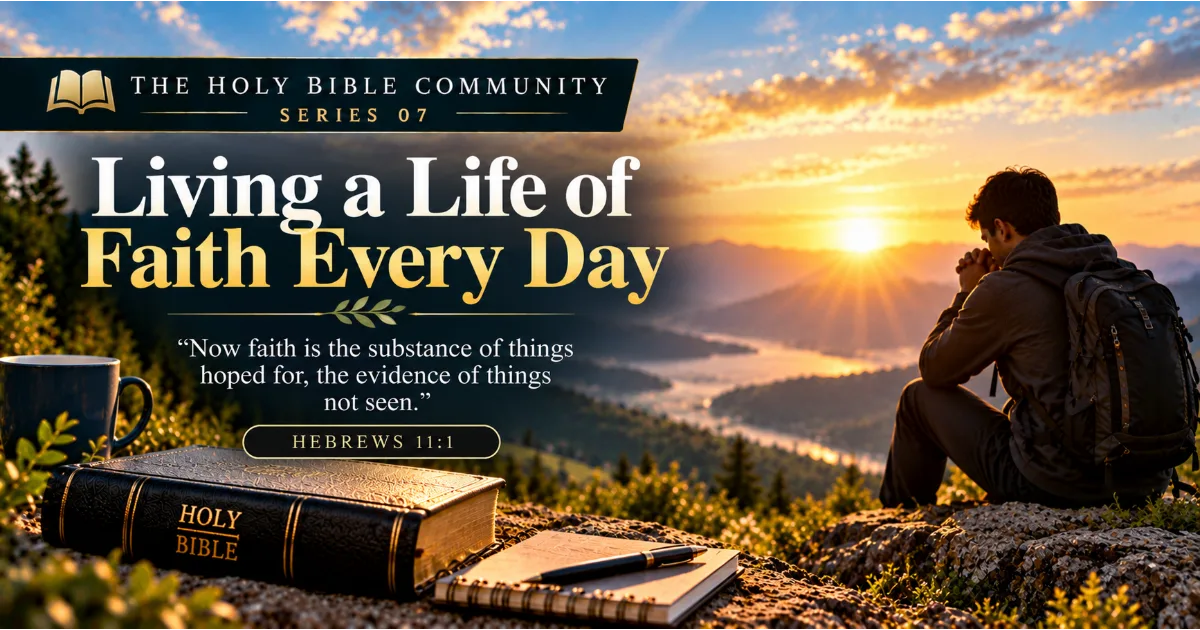
Bible Verse: Hebrews 11:1, King James Version
“Now faith is the substance of things hoped for, the evidence of things not seen.”
What Does It Mean to Live by Faith?
Faith is one of the most important foundations of a Christian life. It shapes how we understand God, how we face uncertainty, how we respond to difficulties, and how we continue walking forward when the future is unclear. Many people associate faith with prayer, attending church, reading the Bible, or asking God for help during difficult moments. These are important expressions of faith, but living by faith involves much more than individual religious activities. It is a daily decision to trust God, follow His Word, and remain faithful even when circumstances do not unfold according to our expectations.
Hebrews 11:1 offers a powerful description of faith: “Now faith is the substance of things hoped for, the evidence of things not seen.” These words remind believers that faith does not depend entirely on what the eyes can see or what the mind can immediately understand. Faith allows us to trust in God's character and promises even when the evidence we want has not yet appeared in our lives.
We often find it easier to believe when everything is going well. When our prayers seem to be answered, our families are healthy, our work is successful, and our plans are moving forward, gratitude and confidence may come naturally. However, the deeper meaning of faith becomes especially important during seasons of waiting, disappointment, uncertainty, and personal struggle. During such moments, faith invites us to look beyond our immediate circumstances and remember the God in whom we have placed our trust.
Living a life of faith every day does not mean that we will never experience fear, sadness, questions, or disappointment. It means that these experiences do not have to separate us from God. We can bring our questions to Him, seek wisdom through His Word, pray honestly, and continue choosing what is right even when we cannot see the complete picture.
The message of Hebrews 11:1 is therefore not limited to extraordinary spiritual experiences. It applies to ordinary decisions, relationships, responsibilities, challenges, and hopes. Faith can be seen in the way we treat people, the way we respond to failure, the way we use our resources, and the way we continue doing good when recognition is absent. A life of faith is built through countless daily decisions to trust God and remain faithful to Him.
1. Understanding the Meaning of Hebrews 11:1
The opening word of this verse, “Now,” directs our attention to the present reality of faith. Faith is not something that matters only when we look back at the past or imagine a distant future. It has meaning in the circumstances we face today. We need faith when we make decisions, when we wait for answers, when we face responsibilities, and when we struggle to understand why certain things are happening.
The word “substance” in this verse communicates the idea of assurance or confidence concerning the things hoped for. Christian hope is not simply a wish that life will become easier or that every personal ambition will succeed. It is a hope rooted in God, His character, and His revealed promises. Believers can have confidence in God's faithfulness even when they do not yet see how a particular situation will unfold.
The phrase “evidence of things not seen” points toward realities that are not directly visible to our physical eyes. We cannot see every aspect of God's work, and we cannot know everything about the future. Nevertheless, Scripture encourages believers to trust God rather than assume that only visible circumstances can be meaningful or reliable.
This does not mean that Christians should reject reason, ignore facts, or believe every claim without examination. Biblical faith is not an invitation to abandon wisdom. It is confidence in God that influences how we understand life, make choices, and respond to what we cannot fully explain.
Faith helps us acknowledge that our knowledge is limited while God's knowledge is complete. It teaches us to remain humble about what we do not understand and confident in the character of the One we trust.
2. Faith Begins With Knowing God
A strong life of faith is built on knowing God rather than merely expecting Him to provide the outcomes we desire. If our understanding of God depends only on whether our plans succeed, our faith may become unstable whenever life brings disappointment. However, when we grow in our understanding of God's character through Scripture, prayer, and faithful reflection, we develop a deeper foundation for trusting Him.
The Bible describes God as faithful, merciful, just, loving, and wise. These qualities help believers understand why trust in Him is meaningful. God is not simply a means of obtaining personal success. He is the One whom Christians worship, love, obey, and seek to know more deeply.
Getting to know God requires time and attention. Reading Scripture helps us understand His character and the way He calls people to live. Prayer allows us to express gratitude, confess our failures, seek guidance, and bring our concerns before Him. Reflection helps us recognize lessons from our experiences without assuming that we can always explain every event.
When we know God more deeply, our faith becomes less dependent on changing circumstances. We may still feel sorrow when something painful happens, but we can remember that hardship does not automatically mean God has abandoned us. We may still have questions when a prayer remains unanswered, but we can continue seeking Him rather than allowing uncertainty to destroy our relationship with Him.
Faith grows as we learn to trust God's character even when we cannot understand His timing.
3. Trusting God When You Cannot See the Future
One of the greatest challenges in life is moving forward without knowing what will happen next. We may have plans for our education, career, family, finances, relationships, or personal development, but circumstances can change unexpectedly. A promising opportunity may disappear, a carefully prepared plan may fail, or a new responsibility may arrive before we feel ready.
These situations can create anxiety because human beings naturally desire certainty. We often want to know whether our decisions will succeed before we make them. We want assurance that our efforts will be rewarded and that the difficult season we are experiencing will soon end.
Faith invites us to recognize that we cannot control every future outcome. We can seek wisdom, make responsible decisions, prepare carefully, and work diligently, but we cannot know everything in advance. Trusting God means acknowledging this limitation while continuing to act with wisdom and integrity.
A person living by faith does not need to know every detail of tomorrow before doing what is right today. If you are searching for employment, you can continue developing your skills, applying for suitable opportunities, and praying for guidance. If you are facing a difficult decision, you can gather reliable information, seek wise counsel, and consider the consequences before choosing your path. If you are waiting for an answer, you can remain patient while fulfilling the responsibilities already in your hands.
Faith does not remove every uncertainty from life. Instead, it changes how we live with uncertainty. Rather than allowing fear of the unknown to control every decision, we learn to take the next responsible step while trusting God with what remains beyond our knowledge.
4. Faith Is More Than Words
It is possible to speak about faith without allowing it to influence our behaviour. We may say that we trust God while continuing to act dishonestly, treat others unfairly, or refuse to accept responsibility for our mistakes. Genuine faith, however, should gradually shape the way we live.
James 2:17 teaches that faith without works is dead. This passage does not mean that people earn God's grace through their achievements. Rather, it emphasizes that living faith expresses itself through action. When a person genuinely believes that God's wisdom is worth following, that belief should influence everyday choices.
Faith becomes visible when we tell the truth even when dishonesty appears more convenient. It becomes visible when we keep a promise, treat a vulnerable person with dignity, forgive someone who has sincerely sought reconciliation, or help a neighbour without expecting a reward. It also becomes visible when we admit that we were wrong and take practical steps to correct the harm we caused.
A life of faith requires consistency between what we believe and how we behave. Our words about God become more meaningful when they are supported by patience, honesty, humility, compassion, and responsibility.
This does not mean that believers will never fail. Christians remain human and may struggle with impatience, selfishness, fear, and other weaknesses. The important question is whether we are willing to acknowledge our failures, seek forgiveness, learn from them, and continue growing in obedience to God.
Faith is not a performance designed to impress other people. It is a sincere relationship with God that transforms our choices over time.
5. Learning to Trust God During Difficult Seasons
Faith is often tested most deeply when life becomes painful. A person may pray for healing while facing illness, seek peace while experiencing family conflict, or ask for guidance while struggling financially. During such seasons, it can be difficult to understand why suffering continues despite sincere prayer.
The Bible does not promise that faithful people will never experience hardship. Many faithful people in Scripture faced opposition, loss, disappointment, and long periods of uncertainty. Their experiences remind us that suffering is not always evidence of weak faith or divine rejection.
When difficulties arise, we should not feel compelled to pretend that everything is fine. God knows our hearts, and honest prayer can include grief, confusion, fear, and questions. The Psalms repeatedly show people bringing their deepest emotions before God while continuing to seek His presence.
Faith during hardship may mean asking God for strength to endure the day rather than demanding an immediate solution. It may mean accepting support from trusted friends, family members, church communities, or qualified professionals. It may mean continuing necessary treatment, making a realistic financial plan, or seeking practical assistance while praying for wisdom and provision.
Trusting God does not require us to refuse help or ignore a serious problem. God can work through the support, knowledge, kindness, and abilities of other people. Receiving appropriate help can be a responsible expression of faith rather than a sign of spiritual weakness.
Even when we cannot explain our circumstances, we can continue seeking God and making choices consistent with His teachings. Sometimes the next step is simply to endure faithfully, ask for help, and refuse to give up hope.
6. Faith and the Importance of Patience
Modern life often encourages us to expect immediate results. We want quick answers, rapid progress, and visible proof that our efforts are succeeding. When something takes longer than expected, we may begin to question whether we are moving in the right direction.
Faith teaches us that patience is an important part of spiritual growth. Some things develop gradually. Relationships require time to build trust, meaningful skills require practice, and personal character is formed through repeated decisions. We cannot force every process to reach completion according to our preferred schedule.
The Bible frequently encourages believers to wait upon the Lord. Waiting does not mean becoming passive or refusing to act. It means remaining faithful while recognizing that some outcomes are beyond our control.
If you are working toward an important goal, continue preparing yourself and fulfilling your responsibilities. If you are praying about a decision, seek wisdom rather than making a rushed choice simply because uncertainty feels uncomfortable. If you have experienced disappointment, give yourself time to recover and consider what you can learn from the experience.
Patience also helps us avoid harmful comparisons. Another person may appear to achieve in a few months what has taken us years to pursue. Their circumstances, responsibilities, opportunities, and challenges may be very different from ours. Comparing our journey with someone else's visible success can create unnecessary discouragement.
A life of faith allows us to appreciate another person's progress without despising our own. We can remain grateful for what we have, work toward meaningful goals, and trust God while accepting that our journey may not follow the same timetable as someone else's.
7. Faith When Prayers Seem Unanswered
One of the most difficult experiences for a believer is praying sincerely and not receiving the answer expected. We may ask for a particular opportunity, restoration of a relationship, relief from suffering, or a solution to a pressing problem. When the situation remains unchanged, disappointment and confusion can become overwhelming.
In such moments, it is important to remember that prayer is not a formula that guarantees every desired outcome. God is not a mechanism through which we obtain everything we request. Christian prayer involves relationship, dependence, worship, confession, thanksgiving, and the desire to understand God's will.
An unanswered prayer can raise genuine questions, and believers should not feel ashamed of bringing those questions before God. Scripture contains prayers of lament in which faithful people express sorrow and ask why they are suffering. Their honesty demonstrates that struggling with difficult questions does not automatically mean that faith has disappeared.
We may never understand the full reason behind a particular outcome. We should therefore be cautious about claiming that every disappointment happened for one specific purpose or that every painful experience is a punishment. Such conclusions can cause unnecessary guilt and may not reflect the truth of the situation.
Instead, we can continue praying, seek wisdom from Scripture, consider practical alternatives, and remain open to guidance. Sometimes a desired opportunity may not be available, a relationship may not be restored, or a difficult situation may require a different response than we originally imagined.
Faith allows us to bring our hopes to God without insisting that our understanding must be complete. It gives us room to grieve while continuing to seek His presence and wisdom.
8. Living by Faith in Your Work and Responsibilities
Faith is not limited to church services or moments of private prayer. It should also influence how we approach our daily responsibilities. Work, education, household duties, professional commitments, and service to others provide opportunities to practise honesty, diligence, patience, and humility.
A Christian who values faithfulness should seek to perform responsibilities with care. Students can study sincerely rather than rely on dishonesty. Employees can fulfil their duties honestly rather than exploit others. Business owners can treat customers fairly, honour agreements, and avoid misleading claims. Parents and caregivers can provide patient guidance and seek to create safe, loving environments.
These actions may appear ordinary, but they reflect the practical meaning of living according to God's teachings. Faith does not excuse carelessness or encourage people to wait passively for success. It encourages us to use our abilities responsibly while recognizing that our opportunities and strengths are gifts to be used wisely.
Colossians 3:23 encourages believers to work heartily, as unto the Lord. This principle reminds us that the value of our work is not measured only by salary, public recognition, or professional status. The way we carry out our responsibilities can also express our commitment to God.
There may be times when honest work goes unnoticed or when unfair treatment creates frustration. Faith can help us preserve our integrity without becoming consumed by resentment. At the same time, integrity does not require accepting abuse or remaining silent about wrongdoing. Seeking fair treatment and appropriate support can be entirely consistent with Christian values.
Whatever our occupation or circumstances, we can ask how our daily work can reflect honesty, service, responsibility, and respect for others.
9. Faith in Relationships With Other People
Relationships offer many opportunities to practise faith because they involve people with different personalities, expectations, weaknesses, and experiences. Even sincere relationships can face misunderstandings, disagreements, and periods of distance.
Living by faith encourages us to treat others with dignity and compassion. It reminds us that our words can encourage or wound, our actions can build trust or destroy it, and our willingness to listen can help resolve conflict.
When disagreements arise, faith can encourage us to speak honestly without becoming cruel. We can listen carefully, acknowledge our own mistakes, and seek reconciliation where it is possible and appropriate. Forgiveness is an important Christian teaching, but forgiveness does not mean pretending that harmful behaviour never occurred or removing every boundary that protects a person from further harm.
Trust may need to be rebuilt through consistent actions, and some relationships may require distance or outside assistance. Love and wisdom should work together rather than being treated as opposing values.
Faith also challenges us to show kindness to people who cannot repay us. We may be tempted to measure our relationships according to personal advantage, social status, or the benefits we receive. Christian love calls us to recognize the dignity of others even when they cannot offer anything in return.
Our faith becomes meaningful when it influences how we speak to family members, colleagues, strangers, and people with whom we disagree. The patience we show at home, the honesty we practise at work, and the compassion we extend to someone in distress can all become expressions of our relationship with God.
10. Faith When You Feel Weak or Inadequate
Many people hesitate to take a meaningful step because they believe they are not capable enough. They may fear failure, criticism, rejection, or the possibility of disappointing others. Sometimes they compare their abilities with those of more experienced people and conclude that they should not even try.
Faith reminds us that personal limitations do not have to prevent us from doing what is right. We do not need to possess every skill, answer every question, or feel completely confident before beginning a responsible task.
The Bible contains accounts of people who felt inadequate when facing important responsibilities. Moses expressed concern about his ability to speak, while Gideon questioned his suitability for the task before him. Their stories remind readers that feelings of weakness can be part of the human experience.
However, faith should not be used to deny our limitations or claim abilities we do not possess. Humility allows us to recognize where we need training, advice, preparation, or assistance. Trusting God can encourage us to develop our abilities rather than hide them because of fear.
If you have an important goal, begin by identifying the next practical step. Learn what you need to know, seek guidance from trustworthy people, and prepare as carefully as possible. If you make mistakes, treat them as opportunities to learn rather than automatic proof that you should abandon your efforts.
Courage does not always mean feeling fearless. Sometimes it means doing the right thing while acknowledging that you are nervous. Faith can help you move forward without requiring you to pretend that every challenge is easy.
11. Faith and Gratitude in Everyday Life
A life of faith becomes healthier when it includes gratitude. It is natural to focus on what is missing, especially when responsibilities are heavy or expectations remain unmet. We may spend so much time thinking about future goals that we fail to appreciate the blessings and opportunities already present.
Gratitude does not require us to deny pain or ignore genuine problems. A person can be grateful for supportive family members while grieving a loss. Someone can appreciate having employment while still seeking better working conditions. A believer can thank God for daily provision while continuing to pray for relief from financial pressure.
The purpose of gratitude is not to silence honest concerns. It is to help us recognize that our lives contain more than the difficulties currently demanding our attention.
We can practise gratitude by reflecting on the people who have supported us, the lessons we have learned, the opportunities available to us, and the simple gifts that often go unnoticed. We can also express appreciation directly to others rather than assuming they already know how much they mean to us.
Gratitude can influence how we use our resources. Instead of constantly comparing our possessions with those of others, we can learn to manage what we have responsibly and share with people in need when we are able.
When gratitude becomes part of our daily routine, it can help us develop contentment without discouraging ambition. We can continue working toward meaningful goals while appreciating the present rather than treating our current lives as worthless until everything changes.
12. Faith Does Not Mean the Absence of Fear
Some believers worry that experiencing fear means they do not have enough faith. They may believe that a truly faithful person should never feel anxious, uncertain, or emotionally overwhelmed. This expectation can create additional suffering because it encourages people to hide their feelings rather than address them honestly.
Faith and fear can exist together. A person may trust God and still feel nervous about an upcoming medical procedure, a difficult conversation, an important examination, or an uncertain financial situation. The presence of fear does not automatically mean that a person's faith is false.
Courage often involves responding wisely despite fear. We can pray for peace, gather the information we need, seek appropriate assistance, and take reasonable precautions. We can also speak with trusted people rather than carry every concern alone.
Psalm 56:3 expresses a response to fear: “What time I am afraid, I will trust in thee.” The verse acknowledges the experience of fear while directing the heart toward trust in God. It does not suggest that fear must never occur. Instead, it presents trust as a response available when fear arises.
If anxiety becomes persistent or seriously affects daily life, seeking help from a qualified mental health professional can be appropriate. Faith and professional care do not have to be in conflict. Responsible care for our emotional well-being can be part of how we respond to the challenges of life.
A faithful life is not a life in which we never struggle. It is a life in which we continue seeking God, wisdom, support, and hope amid our struggles.
13. Faith When You Make Mistakes
Every person makes mistakes. We may make an unwise decision, speak harshly, neglect an important responsibility, or act in a way that harms someone else. When we recognize our failures, we may experience regret, shame, or fear about the consequences.
Faith offers a way to respond to failure without pretending that our actions do not matter. The Christian message emphasizes both the seriousness of sin and the availability of God's mercy to those who repent and turn toward Him.
Repentance involves more than feeling bad about what happened. It includes acknowledging wrongdoing, seeking forgiveness, changing our direction, and making appropriate efforts to repair the harm caused. Depending on the situation, this may require a sincere apology, restitution, professional guidance, or a commitment to different behaviour.
First John 1:9 teaches that God is faithful and just to forgive those who confess their sins. This promise provides hope for people who recognize their failures and genuinely seek restoration.
However, forgiveness should not be used as an excuse to avoid responsibility. We cannot control whether another person is ready to forgive us, and we should not demand immediate reconciliation simply because we have apologized. Trust may take time to rebuild, and some consequences may remain.
Living by faith means allowing God's mercy to lead us toward transformation rather than using past mistakes as an excuse to remain unchanged. We can learn from failure, accept appropriate correction, and continue seeking a life marked by integrity.
Our past may influence our story, but it does not have to determine every decision we make in the future.
14. Faith Through the Example of Hebrews 11
Hebrews 11 is often called the chapter of faith because it describes people whose lives demonstrated trust in God. The chapter refers to Abel, Enoch, Noah, Abraham, Sarah, Moses, and many others. Their experiences were not identical, but their stories illustrate how faith influenced their decisions and their willingness to follow God's direction.
Noah acted in response to God's warning about events he had not yet seen. Abraham left his familiar surroundings and travelled toward a destination he did not fully know. Moses chose to identify with God's people rather than build his life around the temporary privileges available to him in Pharaoh's household.
These examples do not suggest that every believer must repeat the same experiences or pursue extraordinary public achievements. Instead, they demonstrate that faith can shape decisions long before the final outcome becomes visible.
Hebrews 11 also acknowledges that many faithful people suffered, faced opposition, and died without seeing every promise fulfilled during their lifetimes. This detail is important because it prevents us from interpreting faith as a guarantee of immediate comfort or visible success.
The people described in the chapter were not remembered simply because they received everything they wanted. Their stories demonstrate perseverance, obedience, and confidence in God despite uncertainty and hardship.
Their example encourages us to consider what faithfulness looks like in our own circumstances. We may never build an ark, lead a nation, or travel to a distant land because of a divine calling. Nevertheless, we can practise faith by raising our children with care, serving our communities, remaining honest under pressure, helping those in need, and continuing to follow God through difficult seasons.
15. Practical Ways to Strengthen Your Faith Every Day
Faith grows through an ongoing relationship with God and through the daily choices that reflect that relationship. Although every person's circumstances are different, several practical habits can help believers remain spiritually attentive and consistent.
Begin the Day With Prayer
Prayer at the beginning of the day can help you bring your responsibilities, concerns, and decisions before God. You can thank Him for the opportunity to live another day, ask for wisdom, and pray for the people you will encounter. Prayer does not have to involve complicated language. Sincerity matters more than trying to sound impressive.
Read and Reflect on Scripture
Reading the Bible regularly helps you understand God's teachings and develop a stronger foundation for your beliefs. Instead of reading quickly just to complete a chapter, consider what a passage teaches about God, human behaviour, obedience, hope, or compassion. Reflect on how its message can influence a practical decision in your life.
Practise Honesty and Integrity
Make a conscious effort to tell the truth, honour commitments, and treat people fairly. When you discover that you have made a mistake, acknowledge it and take responsibility. These decisions may not always be easy, but they help align your daily conduct with your Christian beliefs.
Show Kindness Through Action
Look for reasonable opportunities to help someone who needs support. You may listen patiently to a friend, assist a neighbour, encourage someone who is discouraged, or contribute to a meaningful cause within your ability. Small acts of kindness can make a genuine difference in another person's life.
Reflect on Your Day
At the end of the day, consider where you acted with patience, where you struggled, and what you can learn from the experience. Thank God for the good you experienced, confess your failures honestly, and ask for guidance for tomorrow. This practice can help you grow without becoming trapped in unnecessary guilt.
Remain Connected to a Faith Community
Fellowship with other believers can provide encouragement, shared learning, prayer, and opportunities to serve. A healthy faith community should encourage compassion, honesty, accountability, and respect rather than manipulation or fear. Seek relationships that help you grow in wisdom and live out your beliefs responsibly.
These habits may appear simple, but their value comes from practising them consistently. A life of faith is formed through repeated choices rather than occasional moments of enthusiasm.
16. Becoming a Source of Hope for Others
Faith is not intended to remain entirely private. Although our relationship with God involves personal prayer and reflection, it can also influence the way we contribute to the lives of others.
A person who lives by faith can become a source of encouragement during difficult times. This does not require having an answer for every problem or offering religious explanations whenever someone is suffering. Often, the most meaningful response is to listen carefully, offer practical assistance, and remain present when another person feels alone.
When someone experiences disappointment, avoid making promises about outcomes you cannot guarantee. Instead of telling a struggling person that everything will certainly happen according to their wishes, you can remind them that they deserve compassion and support while helping them consider the next responsible step.
Faith can also inspire service beyond our immediate circle. We can support people who are experiencing poverty, loneliness, discrimination, illness, or other hardships. We can contribute our time, skills, resources, or attention according to our circumstances.
Our actions should reflect the love and dignity we say we believe in. Treating people with respect is especially important when they hold different beliefs, come from different backgrounds, or cannot offer us any personal advantage.
When faith produces humility, compassion, honesty, and generosity, its influence extends beyond our own lives. It becomes a means through which we can encourage others and contribute to a more caring community.
17. A Life of Faith Is a Journey, Not a Destination
Spiritual growth does not happen all at once. There may be seasons when prayer feels natural and Scripture seems especially meaningful, as well as seasons when we feel distracted, discouraged, or uncertain. We may grow in patience in one area while continuing to struggle with pride, anger, fear, or selfishness in another.
The Christian life is a continuing journey of learning, repentance, obedience, and dependence on God. We should not assume that every struggle means we have made no progress. At the same time, we should remain willing to recognize areas in which our attitudes and actions need to change.
Faith requires humility because we never reach a point at which we have nothing left to learn. We can continue growing in our understanding of Scripture, listening to wise counsel, examining our motives, and seeking opportunities to serve.
There may be days when living faithfully requires a difficult conversation, a decision to refuse dishonesty, or the courage to acknowledge a painful truth. On other days, it may simply mean fulfilling ordinary responsibilities with patience and care.
The value of a faithful life is not measured by how impressive it appears to other people. It is reflected in our continuing willingness to trust God, follow His teachings, seek forgiveness, and practise love in the circumstances we actually face.
Every day provides another opportunity to grow in faith, even when that growth feels slow or difficult to recognize.
18. Questions for Personal Reflection
As you reflect on Hebrews 11:1, take some time to examine how faith is influencing your present life. Ask yourself whether you trust God only when circumstances are favourable or whether you continue seeking Him when answers are delayed. Consider whether fear of the future is preventing you from taking a responsible step, and whether there is an area of your life in which you need greater patience, honesty, or courage.
Think about the relationship between your beliefs and your actions. Are you treating people with the kindness and respect that your faith calls you to demonstrate? Are you accepting responsibility for your mistakes? Are you making decisions through prayer, wisdom, and careful consideration rather than allowing pressure or comparison to control you?
You may also want to identify one practical action you can take today. Perhaps you need to apologize to someone, begin a neglected responsibility, spend time reading Scripture, seek wise advice, or offer help to a person who is struggling. Choose an action that is meaningful and realistic, and take it with sincerity.
These questions are not intended to create guilt or suggest that you must become perfect before you can live by faith. They are invitations to grow in your relationship with God and allow that relationship to shape your daily life.
Faith becomes stronger as we continue returning to God, learning from His Word, and practising the values we believe in.
Conclusion: Keep Walking by Faith
Hebrews 11:1 reminds us that faith gives substance to the things hoped for and provides assurance concerning realities that are not yet visible. It calls believers to trust God beyond the limits of immediate circumstances, while continuing to live responsibly, wisely, and compassionately.
Living a life of faith every day does not mean knowing every answer, avoiding every mistake, or escaping every difficulty. It means choosing to seek God when the future is uncertain, remaining faithful when progress is slow, and allowing His teachings to influence our decisions and relationships.
There will be times when your prayers are answered in ways that bring joy and gratitude. There may also be times when you must wait, grieve, reconsider your plans, or seek help from others. Through these different seasons, you can continue growing in patience, humility, courage, and trust.
Remember that faith is not merely something we discuss. It is something we practise through the way we live. It appears in honest work, compassionate service, responsible decisions, sincere prayer, forgiveness, gratitude, and the willingness to do what is right even when no one is watching.
You do not need to see the entire road before taking the next wise step. You do not need to understand every circumstance before bringing your concerns to God. You do not need to feel completely fearless before choosing courage.
Continue reading God's Word, praying sincerely, seeking wisdom, and treating others with love. When you make mistakes, acknowledge them and seek to grow. When you feel weak, ask for help. When you experience blessings, give thanks. When you face uncertainty, remember that your limited understanding does not define everything that is possible.
Let your faith become part of your everyday life, not only during moments of worship but also in the quiet decisions that shape your character. May your life reflect growing trust in God, a sincere commitment to His teachings, and a willingness to become a source of hope and kindness to others.
Faith means trusting God with what you cannot yet see while faithfully doing what you can today.
A Prayer for a Life of Faith
Heavenly Father, thank You for Your Word and for the reminder that faith gives us hope beyond what we can see. Teach me to trust You when I do not understand my circumstances and to seek Your wisdom when I face difficult decisions. Help me remain patient when answers are delayed, courageous when fear arises, and humble when I make mistakes. Guide my thoughts, words, and actions so that my life reflects honesty, kindness, compassion, and love. Help me fulfil my responsibilities faithfully and recognize opportunities to serve others. When I feel discouraged, remind me to seek Your presence and continue doing what is right. Strengthen my faith each day and help me walk forward with hope, wisdom, and gratitude. In Jesus Christ's name, I pray. Amen.
#TheHolyBibleCommunity #Series07 #LivingByFaith #Hebrews111 #FaithInGod #ChristianFaith #DailyFaith #TrustInGod #GodsWord #BibleVerse #BibleStudy #ChristianLiving #WalkByFaith #FaithAndHope #PrayerLife #SpiritualGrowth #JesusChrist #ChristianEncouragement #BiblicalWisdom #HopeInGod #FaithEveryDay #GodsPromises #BibleReflection #GrowingInFaith #WalkWithGod