

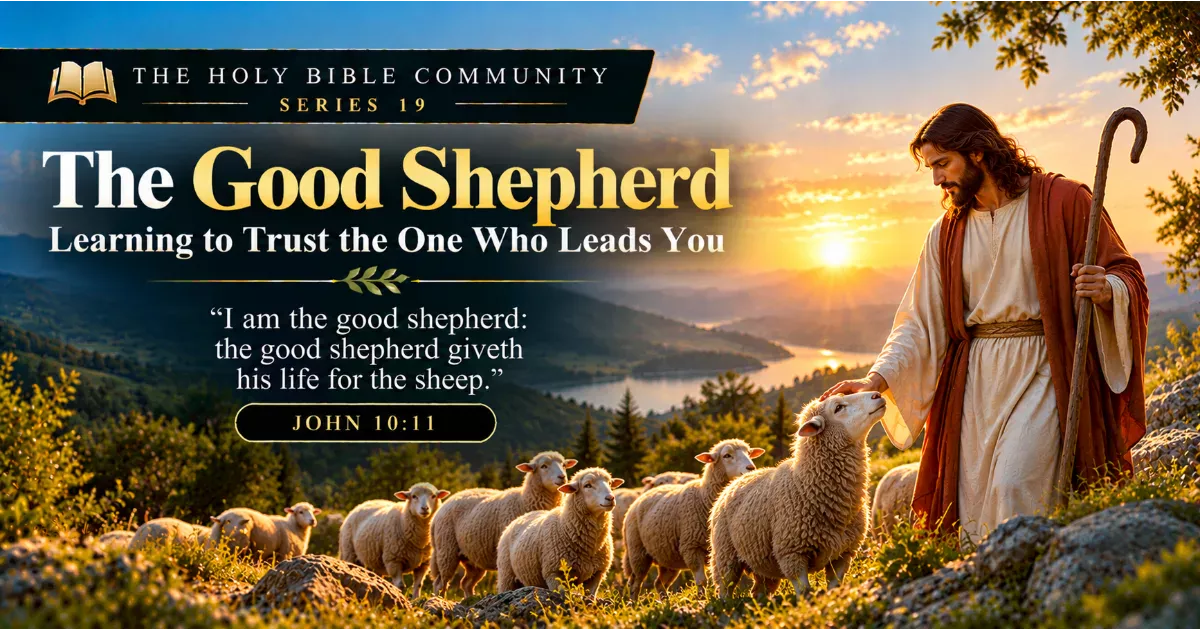
Bible Verse: John 10:11 (KJV)
“I am the good shepherd: the good shepherd giveth his life for the sheep.”
You Do Not Have to Find Your Way Alone
Life often feels like a journey through unfamiliar places. We make decisions about our families, careers, relationships, responsibilities, and future, hoping that the choices we make will lead us toward a meaningful life. Sometimes the path seems clear, and we move forward with confidence. At other times, we face uncertainty, encounter unexpected obstacles, or realize that the direction we have chosen may not be the right one.
During such moments, we naturally look for guidance. We may seek advice from family members, listen to experienced people, study our options, or try to understand what the future might hold. These are valuable ways of making thoughtful decisions, but there are times when even careful planning cannot answer every question.
The Bible offers a powerful image of guidance and care through the relationship between a shepherd and his sheep. In John 10:11, Jesus declares, “I am the good shepherd: the good shepherd giveth his life for the sheep.”
These words reveal something important about the character of Jesus. He does not describe Himself as a distant ruler who remains unconcerned about the people under His care. He presents Himself as a shepherd who knows the needs of the sheep, guides them, protects them, and is willing to sacrifice Himself for their good.
In biblical times, shepherds had a demanding responsibility. They needed to lead their flocks toward suitable places for grazing and water, remain alert to danger, and care for animals that could become lost or vulnerable. The relationship required attention, patience, courage, and consistent effort.
Jesus uses this familiar image to explain His relationship with those who follow Him. His leadership is not based on selfish ambition or a desire to exploit others. It is characterized by knowledge, commitment, sacrifice, and love.
This nineteenth post in The Holy Bible Community series explores the meaning of Jesus as the Good Shepherd, how His example teaches us to trust His guidance, why genuine leadership requires sacrifice, and how we can respond to His care in our everyday lives.
1. Understanding the Meaning of John 10:11
The Gospel of John presents Jesus through a series of powerful images that reveal His identity and mission. In John 10, Jesus describes Himself as the door for the sheep and the Good Shepherd. These images communicate protection, access, guidance, and a relationship built on trust.
The chapter contrasts the shepherd with those who do not genuinely care for the flock. A hired worker may abandon the sheep when danger appears because the animals do not belong to him and their safety is not his deepest concern. The Good Shepherd, by contrast, demonstrates His commitment through His willingness to give His life for the sheep.
The difference is not merely one of occupation. It is a difference in character and purpose.
Jesus explains that the Good Shepherd knows the sheep and that the sheep recognize His voice. This image describes a relationship in which care is personal rather than distant. The shepherd does not treat the flock as an anonymous collection of animals. He attends to their needs and leads them with purpose.
When Jesus says that the Good Shepherd gives His life for the sheep, He points toward His own sacrificial mission. In the Christian understanding of the Gospel, Jesus willingly faces death for the sake of humanity and offers salvation through His life, death, and resurrection.
The verse therefore teaches more than the comforting idea that God provides guidance. It reveals the character of the One who leads. Jesus is presented as a shepherd whose love is demonstrated through action and sacrifice.
This matters because trust depends partly on the character of the person we follow. We may hesitate to follow someone whose intentions are selfish or whose behaviour is unpredictable. Jesus invites His followers to recognize the depth of His commitment and to place their confidence in Him.
2. Why Jesus Calls Himself the Good Shepherd
The title “Good Shepherd” communicates the kind of leader Jesus is. His goodness is not simply a pleasant personality or a collection of kind words. It is demonstrated through His concern for the people He leads.
Throughout the Gospels, Jesus responds to people who are overlooked, suffering, confused, or burdened by their circumstances. He teaches those who seek understanding, offers compassion to those who are distressed, challenges hypocrisy, and calls people toward repentance and renewed life.
His ministry shows that divine care is not limited to people who appear powerful, successful, or socially respected. Jesus repeatedly engages with individuals whose circumstances make them vulnerable or whose communities have treated them with contempt.
The Good Shepherd image brings these qualities together. Jesus guides, protects, teaches, and gives Himself for the sake of those He loves.
His goodness also includes truth. A good shepherd does not lead the flock toward danger simply because that direction seems comfortable. In a similar way, Jesus' teachings sometimes challenge human desires, habits, and assumptions. His guidance may call people to forgive, practise humility, reject dishonesty, care for others, or reconsider the priorities that shape their lives.
Such teaching can be difficult because we often prefer guidance that confirms what we already want to do. Yet genuine care does not always mean telling someone what they wish to hear. It can mean directing them toward what is right and life-giving.
Trusting Jesus as the Good Shepherd therefore involves more than asking Him to make life comfortable. It involves learning from His teachings and allowing them to shape our choices.
His leadership is marked by love, but that love is not separate from truth, justice, and transformation.
3. The Shepherd Knows His Sheep Personally
One of the most comforting themes in John 10 is the personal relationship between the shepherd and the sheep. Jesus speaks about knowing His own and being known by them.
This image challenges the fear that we are merely anonymous individuals in a vast world. People may overlook us, misunderstand our experiences, or judge us according to appearances. We may sometimes feel that our struggles are too ordinary to matter or that nobody fully understands what we are carrying.
The Good Shepherd image presents a different picture of care. In Christian faith, Jesus' knowledge of His followers is personal and profound. Their lives are not reduced to public achievements, social status, financial resources, or the opinions of other people.
This does not mean that life will always feel easy or that we will never experience loneliness. It means that our deepest worth does not depend entirely on whether other people notice or approve of us.
A person who is struggling privately may still have a life of great value. Someone who has experienced failure is not defined solely by that failure. A person who feels uncertain about the future is not excluded from God's care simply because they do not have every answer.
The shepherd's knowledge also suggests that we are not required to pretend to be someone else before approaching Jesus. We can bring our fears, questions, weaknesses, and hopes honestly before Him.
Prayer can become a place where we acknowledge what is happening within us. Scripture can help us examine our choices and understand the character of Christ. Christian fellowship can provide opportunities for encouragement, learning, and practical support.
Knowing that Jesus is presented as the Good Shepherd can remind us that our lives matter even during seasons when we feel overlooked.
4. Learning to Recognize the Shepherd's Voice
John 10 uses the image of sheep recognizing the shepherd's voice. In the context of Jesus' teaching, this points toward the relationship between Christ and those who follow Him.
For Christians today, learning to recognize the guidance of Jesus involves becoming familiar with His teachings and allowing them to influence our decisions. It is not simply a matter of treating every strong feeling, sudden thought, or unexpected event as a direct message from God.
Our feelings can be influenced by fear, desire, exhaustion, previous experiences, and incomplete information. Therefore, spiritual discernment requires patience and wisdom.
Scripture provides an important foundation. When considering a decision, we can ask whether our intended action reflects the character and teachings of Jesus. Does it encourage honesty or deception? Does it express compassion or cruelty? Does it protect the vulnerable or exploit them? Does it reflect humility or selfish pride?
We can also seek advice from trustworthy and mature people who understand the situation. Their perspective may help us identify assumptions, risks, or responsibilities that we have overlooked.
Prayer gives us an opportunity to ask for wisdom and examine our motives. We may discover that a decision is being driven mainly by fear, resentment, impatience, or the desire to impress others.
Recognizing the Shepherd's voice is therefore connected with a growing understanding of His teachings and character. It involves learning to distinguish between what is convenient and what is faithful.
Sometimes the right choice may not produce immediate comfort. Telling the truth may be difficult. Apologizing may require humility. Establishing a healthy boundary may disappoint someone. Refusing an unethical opportunity may involve financial sacrifice.
Yet following Jesus means giving serious attention to His teaching rather than allowing convenience alone to determine our actions.
5. The Good Shepherd Gives His Life for the Sheep
The central statement in John 10:11 is that the Good Shepherd gives His life for the sheep. This points toward the sacrificial nature of Jesus' mission and occupies a central place in Christian faith.
The Gospel of John develops this theme further when Jesus explains that He lays down His life willingly. His death is not presented simply as an unfortunate event that happened outside His purpose. It is part of the mission through which Christians understand God's love and the offer of salvation.
This sacrifice reveals a form of love that goes beyond words. Jesus' care is demonstrated through what He is willing to give.
The Christian message of the cross teaches that sin and human brokenness are taken seriously, while God's grace offers a way toward forgiveness and reconciliation. Through Jesus' death and resurrection, Christians find the foundation of their hope in salvation and new life.
For believers, this truth can shape how they understand their relationship with God. They do not need to earn divine love through perfect performance or pretend that they have never made mistakes. They are invited to respond to the grace offered through Christ with faith, repentance, gratitude, and a transformed life.
The sacrificial example of Jesus also challenges our understanding of love. Love is not merely a feeling that exists when everything is convenient. It can involve patience, service, honesty, and a willingness to place another person's genuine wellbeing above selfish ambition.
However, Christ's sacrifice should not be misused to justify exploitation or abuse. The fact that Jesus gave His life does not mean that people should demand that others tolerate mistreatment or abandon every healthy boundary.
Christian love involves dignity, truth, and care. Sacrifice should not become an excuse for someone to manipulate another person.
The Good Shepherd shows us a love that protects rather than exploits, serves rather than dominates, and gives rather than selfishly takes.
6. Trusting the Shepherd When the Path Is Unclear
One of the hardest parts of life is moving forward without knowing exactly what lies ahead. We may need to make decisions about employment, education, relationships, finances, or family responsibilities without being able to predict every outcome.
When uncertainty becomes uncomfortable, we may try to force a decision before we have enough information. Alternatively, we may remain frozen because we are afraid of making the wrong choice.
The Good Shepherd image offers encouragement to seek guidance rather than believing that we must understand every detail of the future before taking a step.
Trusting Jesus does not mean that every decision will become obvious through a sudden feeling. Nor does it guarantee that every plan we make will succeed. Instead, it encourages us to seek wisdom, examine our motives, and follow the principles of Scripture while acknowledging our limitations.
Suppose you are considering a career change. You can pray for guidance while researching the options, evaluating your responsibilities, seeking experienced advice, and preparing carefully.
If you are facing a relationship decision, you can reflect on honesty, respect, safety, and the long-term consequences of different choices. You can seek counsel from trustworthy people rather than relying only on immediate emotions.
If you are uncertain about a financial commitment, you can examine the facts, consider the risks, and avoid making promises you cannot reasonably fulfil.
Faith and careful decision-making are not enemies. Trusting the Shepherd can encourage us to become more thoughtful about the paths we choose.
Sometimes guidance involves moving forward. Sometimes it involves waiting for more information. Sometimes it means changing direction after recognizing that our original plan was unwise.
The goal is not to control the entire journey. It is to follow Christ faithfully through the decisions and responsibilities before us.
7. When You Feel Lost or Have Made Mistakes
Sheep can wander away from the flock, and the image of the shepherd naturally brings to mind the vulnerability of those who become lost. Human beings also make choices that lead us away from wisdom, truth, and the values we know are important.
We may act out of anger, become dishonest to avoid consequences, neglect relationships, or pursue ambitions that damage our wellbeing and the people around us. Sometimes we recognize our mistakes quickly. At other times, it takes a painful experience to understand where we went wrong.
When this happens, shame can make it difficult to seek help. We may believe that a mistake has permanently defined us or that we must hide our failure from God and others.
The Christian message offers a different response. Jesus calls people toward repentance, forgiveness, and renewed life. Recognizing wrongdoing is not the end of the journey. It can become the beginning of a more honest relationship with God and a more responsible way of living.
Repentance involves more than feeling regret. It includes acknowledging what was wrong, turning away from harmful behaviour, and taking practical steps toward change.
If you have hurt someone, you may need to apologize and make amends where possible. If you have developed a destructive habit, you may need support and a realistic plan to change it. If your decisions have created financial or personal consequences, you may need to face those consequences honestly rather than trying to hide them.
Forgiveness does not always remove every consequence, and rebuilding trust may take time. However, failure does not have to become the final definition of your life.
The Good Shepherd image reminds Christians that Jesus' mission includes seeking and saving the lost. It offers hope to people who recognize their need for guidance and are willing to turn toward Him.
8. The Difference Between the Good Shepherd and False Guides
John 10 contrasts the Good Shepherd with those who do not genuinely care for the sheep. This distinction remains important because people often encounter voices that promise security, success, or happiness while serving their own interests.
Some voices appeal to fear. They tell us that we must act immediately or lose everything. Others appeal to pride by promising that we are superior to everyone around us. Still others encourage dishonesty, selfishness, or harmful behaviour by presenting these choices as necessary for success.
Religious language can also be misused. A person may claim spiritual authority to demand unquestioning obedience, financial sacrifice, secrecy, or tolerance of mistreatment. Such demands should not be accepted simply because they are expressed in religious terms.
The character of Jesus provides a standard for evaluating leadership. His teaching emphasizes truth, humility, love, service, and responsibility. A leader who consistently exploits vulnerable people or refuses accountability should not be treated as trustworthy merely because they claim to speak for God.
Believers should examine teachings carefully, consider their consistency with Scripture, and seek wise counsel when serious questions arise.
Healthy spiritual leadership should encourage people to grow in wisdom and responsibility rather than making them entirely dependent on one individual's control.
This does not mean that every disagreement proves that a leader is false or that people should reject all guidance. It means that discernment matters.
A shepherd protects the flock. A false guide uses the flock for personal gain.
Learning this distinction can help us make better decisions about whom we trust, what advice we follow, and how we respond when someone attempts to control us through fear or manipulation.
Jesus' example invites us to value leadership that serves others and respects their dignity.
9. Following the Shepherd in Everyday Decisions
Faith is not limited to worship services, prayer meetings, or moments of personal reflection. Following Jesus can influence the ordinary decisions that shape our lives.
At work, this may mean choosing honesty even when dishonesty appears more profitable. It may mean treating colleagues with respect, accepting responsibility for mistakes, and refusing to participate in actions that harm others.
Within families, following Jesus may involve listening patiently, speaking truthfully, caring for those who depend on us, and admitting when we are wrong. It may also involve setting appropriate boundaries when relationships become harmful.
In financial matters, it can mean practising responsible stewardship, avoiding deception, and considering how our decisions affect others.
In public life, it may mean treating people with dignity even when we disagree with them. It may involve resisting cruelty, refusing to spread claims we know are false, and recognizing the needs of vulnerable people.
These choices may appear ordinary, but they reveal the values that guide our lives.
Following the Good Shepherd does not mean that every decision will be easy. Sometimes doing what is right may involve losing an advantage, disappointing someone, or accepting a slower path toward a goal.
However, faith invites us to measure our decisions by more than immediate convenience. We can ask whether our actions reflect the character of Christ and whether they contribute to a life shaped by truth, compassion, and responsibility.
Small decisions can gradually shape our character. When we repeatedly choose honesty over deception, patience over cruelty, and service over selfishness, we practise the kind of life that Christian discipleship encourages.
The Shepherd's guidance is therefore relevant not only to major life decisions but also to the daily choices through which our values become visible.
10. Becoming More Like the Good Shepherd in Our Relationships
Jesus' example also challenges the way we treat other people. If we understand Him as a shepherd who knows, protects, and cares for those under His guidance, we can ask how these qualities might influence our own relationships.
Parents, teachers, managers, community leaders, and friends all have opportunities to influence others. The responsibility may differ, but the principle remains relevant: leadership should not become an excuse for selfishness.
A caring leader listens to concerns rather than dismissing them automatically. A responsible parent considers the needs of children while providing appropriate guidance and boundaries. A good friend offers support without trying to control every decision.
These examples do not require us to sacrifice every personal need. Healthy relationships involve mutual respect, reasonable limits, and shared responsibility.
The Good Shepherd's example also encourages us to notice people who are easily overlooked. Someone may appear confident while privately struggling. A colleague may be dealing with family pressure. A neighbour may need practical assistance but feel embarrassed to ask.
We cannot know every person's circumstances, but we can practise kindness, listen carefully, and avoid judging people solely by their outward appearance.
We can also recognize when our own behaviour has become selfish or controlling. Perhaps we have demanded too much from someone, refused to listen, or treated another person's vulnerability as an inconvenience.
Following Jesus involves a willingness to examine these patterns and make changes.
The goal is not to imagine that we can become perfect through our own effort. It is to allow the teachings and example of Christ to shape the way we respond to others.
Love becomes meaningful when it is expressed through consistent actions that respect people's dignity and seek their genuine wellbeing.
11. Practical Ways to Follow the Good Shepherd
The message of John 10:11 can become part of everyday life through a few deliberate practices.
Begin by spending time reading the teachings of Jesus in the Gospels. Pay attention to how He treats people, responds to suffering, challenges hypocrisy, and calls His followers toward truth and compassion.
When facing a decision, pause before acting impulsively. Identify the facts, consider the responsibilities involved, and ask which choice best reflects honesty, wisdom, and love. Pray for guidance, but do not treat every passing emotion as a certain message from God.
Seek advice from people who are trustworthy, experienced, and willing to help you think clearly. Be cautious of anyone who uses fear or spiritual authority to demand unquestioning obedience or to excuse harmful behaviour.
Practise listening. Just as the shepherd image emphasizes recognition and relationship, our own relationships can improve when we take time to understand others rather than assuming we already know what they think.
Accept responsibility when you make mistakes. Acknowledge what happened, apologize where appropriate, and identify practical steps that can prevent the same behaviour from continuing.
Make space for rest and reflection. Constant activity can make it difficult to examine our priorities. Quiet prayer and Scripture reading can help us notice where we may have become distracted by fear, pride, or the desire for approval.
Finally, look for opportunities to serve. This might involve helping a family member, supporting someone who is struggling, mentoring a younger person, or treating a colleague with greater patience.
These practices do not guarantee a life without difficulties. They help us respond to difficulties with greater wisdom and a clearer commitment to following Jesus.
12. A Prayer for Guidance from the Good Shepherd
Heavenly Father, thank You for sending Jesus Christ, the Good Shepherd who knows His people and gave His life for them. Thank You for the reminder that Your care is not distant or indifferent, but is revealed through the love and sacrifice of Christ.
Please guide me when I am uncertain about the direction of my life. Give me wisdom to make responsible decisions and humility to recognize when I need advice or correction.
Help me recognize the teachings of Jesus and allow them to shape my thoughts, words, and actions. Protect me from voices that encourage dishonesty, selfishness, fear, or harmful behaviour. Give me discernment to recognize leadership that serves others and courage to question demands that misuse spiritual authority.
When I make mistakes, help me acknowledge them honestly. Give me the strength to repent, seek forgiveness, make amends where possible, and learn to live differently.
When I feel lost or discouraged, remind me that failure does not have to become the final chapter of my life. Help me turn toward You and seek the guidance I need.
Teach me to treat others with the patience, compassion, and respect that reflect the example of Jesus. Help me care for those who depend on me without becoming controlling, and help me establish healthy boundaries where they are necessary.
When the future is uncertain, give me courage to take the next wise step without demanding that I understand every part of the journey.
May I learn to recognize Your guidance through Scripture, prayer, wise counsel, and the practice of living according to Your truth.
Thank You for the hope Christians find in Jesus, the Good Shepherd. Help me follow Him faithfully, one decision and one day at a time.
In Jesus' name, Amen.
Conclusion: Follow the Shepherd Who Truly Cares for You
John 10:11 gives us a powerful picture of Jesus: “I am the good shepherd: the good shepherd giveth his life for the sheep.”
These words reveal a form of leadership rooted in personal care, truth, protection, and sacrifice. Jesus is not presented as someone who uses people for His own advantage. He is the Shepherd who gives Himself for the sake of those He loves.
Life will continue to bring uncertainty. We may face decisions without clear answers, experience disappointment, or discover that our original plans need to change. We may also make mistakes that require repentance and a new direction.
During such times, the image of the Good Shepherd encourages us to seek Christ's guidance through His teachings and example. It reminds us that we do not need to approach every decision through fear or believe that our own understanding is sufficient for every circumstance.
Following Jesus does not mean abandoning careful thought or refusing practical help. It means allowing faith to shape our decisions, treating others with dignity, accepting responsibility, and seeking wisdom when the way ahead is unclear.
If you feel lost today, begin with the next step you can take responsibly. Read Scripture, pray honestly, seek trustworthy counsel, and consider what your choices reveal about the values guiding your life.
If you have made mistakes, acknowledge them and seek a better direction. If you are facing uncertainty, remember that you do not need to understand the entire journey before taking one faithful step.
Remember: The Good Shepherd is not defined by the comfort He promises, but by the love, truth, and sacrifice through which He leads.
May John 10:11 remind you to seek the guidance of Jesus, trust the foundation of His teaching, and follow His example in the ordinary decisions of life. May your faith grow through wisdom, humility, compassion, and a willingness to live according to His words.
#TheHolyBible #HolyBibleCommunity #John1011 #GoodShepherd #JesusChrist #Faith #TrustInJesus #ChristianLiving #BibleVerse #DailyDevotion #GodsGuidance #BiblicalWisdom #ChristianFaith #Prayer #SpiritualGrowth