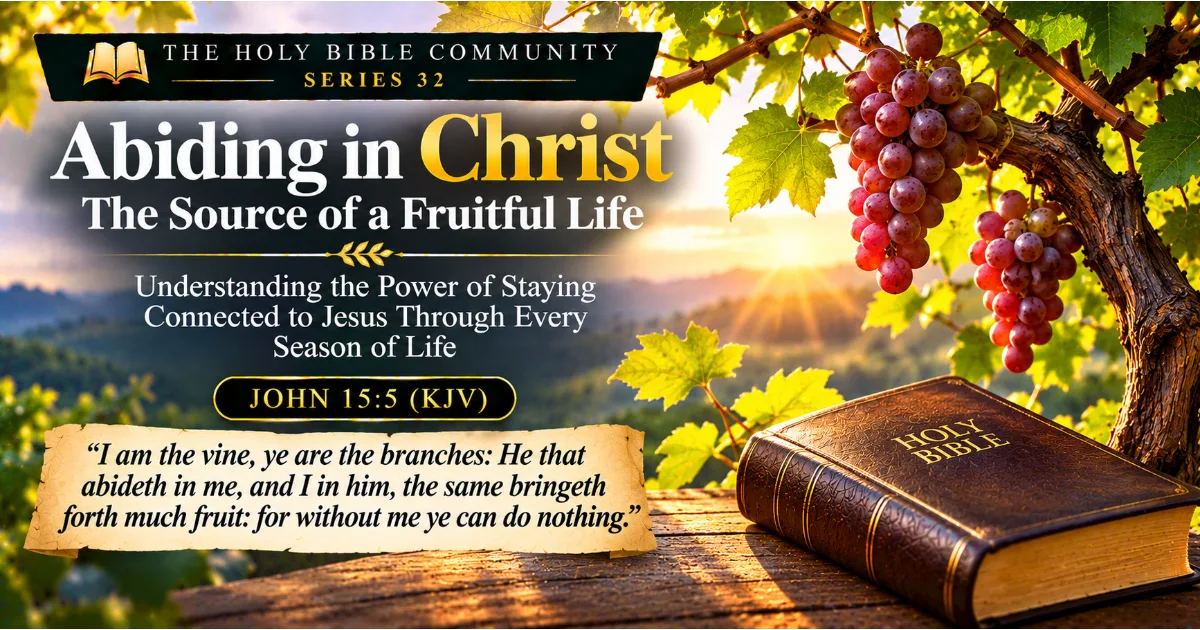
Understanding the Power of Staying Connected to Jesus Through Every Season of Life
Bible Verse: John 15:5 (KJV)
“I am the vine, ye are the branches: He that abideth in me, and I in him, the same bringeth forth much fruit: for without me ye can do nothing.”
The Importance of Staying Connected to Christ
Every living thing needs the right conditions to grow. A tree requires healthy roots, nourishing soil, sunlight, and water. A river needs a continuous source of water to keep flowing. A branch needs to remain connected to its tree if it is to receive nourishment and produce fruit. When a branch is separated from its source, it may retain its appearance for a short time, but eventually it loses its strength, dries up, and becomes unable to produce anything.
Continue Reading
Jesus used this simple picture of a vine and its branches to explain one of the most important principles of Christian life. In John 15:5, He declared, “I am the vine, ye are the branches.” Through these words, Jesus taught His disciples that a fruitful spiritual life does not come from human strength, personal achievements, religious activities, or the approval of other people. It comes from remaining connected to Him.
Many people desire a meaningful life. They want to become better individuals, develop stronger character, overcome weaknesses, serve others, and live according to God's will. They may sincerely attempt to achieve these goals through discipline and determination. Although discipline and responsible action are important, Jesus teaches that lasting spiritual fruitfulness begins with a relationship with Him.
Abiding in Christ is not simply about remembering Jesus occasionally or turning to Him only when difficulties arise. It means maintaining a living relationship with Him through faith, obedience, prayer, trust, and dependence. It means allowing His teachings to influence our decisions, attitudes, relationships, priorities, and everyday conduct.
The message of John 15:5 is especially important because it reminds us that Christianity is not merely a collection of religious activities. It is a relationship with Jesus that transforms the way we live. The purpose of this relationship is not simply to make us appear religious, but to help us develop a character that reflects the love, humility, patience, kindness, and faithfulness of Christ.
Understanding the Illustration of the Vine and the Branches
In John 15, Jesus presents Himself as the true vine, His Father as the husbandman or gardener, and His followers as the branches. This illustration would have been familiar to His listeners because vineyards and agricultural life were common parts of their world.
A branch does not create its own source of life. It receives nourishment from the vine. Its ability to grow leaves, develop flowers, and produce fruit depends on its connection to the main plant. The branch cannot become fruitful by simply trying harder while remaining separated from the vine. Its connection is essential.
Jesus applies this principle to the spiritual life. Human beings cannot produce the lasting spiritual character God desires through independent effort alone. They need the life and guidance that come through Christ.
This does not mean that Christians should become passive or stop making responsible decisions. Rather, it means that their efforts should grow out of their relationship with Jesus. They work, serve, forgive, love, and make decisions while depending on His wisdom and strength.
The illustration also reminds us that spiritual growth is a process. A healthy branch does not produce mature fruit immediately. Growth takes time, nourishment, care, and the right conditions. In the same way, developing Christian character requires patience and continued dependence on Christ.
What Does It Mean to Abide in Christ?
The word abide carries the idea of remaining, continuing, dwelling, and staying. To abide in Christ means to continue in a relationship with Him rather than treating faith as an occasional activity.
A person may attend church, read a Bible verse, participate in religious celebrations, and still struggle to maintain a meaningful daily relationship with Jesus. These activities can be valuable, but they should lead to a deeper connection with Him. Abiding is about the heart and the direction of one's life.
It means allowing Jesus to remain central even when circumstances change. When life is peaceful, we continue to depend on Him. When difficulties arise, we do not abandon our faith. When we experience success, we remain humble. When we make mistakes, we return to Him with repentance and a desire to grow.
Abiding also involves allowing the words of Christ to remain within us. His teachings should not be limited to something we hear during a religious gathering. They should become part of the way we understand people, evaluate choices, handle conflict, and respond to challenges.
For example, when someone treats us unfairly, the teachings of Jesus remind us to avoid hatred and revenge. When we have an opportunity to help another person, His example encourages generosity. When pride influences our decisions, His humility challenges us to reconsider our attitude.
Abiding in Christ is therefore a continuous relationship that influences ordinary life. It is not restricted to a particular building, day, or religious event.
Why Jesus Says, "Without Me Ye Can Do Nothing"
Jesus' words in John 15:5 are direct and powerful. He does not say that we can accomplish a little less without Him. He says that without Him we can do nothing.
This statement needs to be understood in its spiritual context. Human beings can accomplish many ordinary tasks through knowledge, physical ability, planning, education, and effort. People can build businesses, develop technology, create art, pursue careers, and achieve remarkable things.
However, Jesus is speaking about the spiritual fruitfulness that comes from a relationship with God. Without Him, we cannot produce the kind of lasting spiritual fruit that reflects His character and fulfils God's purpose.
A person may appear successful while struggling with bitterness, selfishness, dishonesty, arrogance, or a lack of compassion. External achievement does not automatically produce inner transformation. Spiritual fruitfulness is measured by more than visible accomplishments.
Jesus reminds us that our deepest source of spiritual life is not our own ability. It is our connection with Him. We may possess intelligence, experience, resources, and influence, but these things cannot replace the need for God's guidance.
This teaching encourages humility. It reminds us not to become proud of our achievements or believe that we are completely self-sufficient. At the same time, it gives us confidence because our weaknesses do not have to determine the limits of our spiritual growth. We can depend on Christ rather than relying entirely on our own strength.
The Difference Between Religious Activity and a Living Relationship
One of the challenges in Christian life is confusing religious activity with spiritual growth. A person may be involved in many religious responsibilities but still struggle to practise the values taught by Jesus.
Religious activities can be meaningful when they strengthen faith and encourage obedience. Reading Scripture, attending worship, praying, serving, and participating in fellowship can help believers grow. However, these activities should never become substitutes for a genuine relationship with Christ.
Consider someone who reads the Bible every morning but regularly speaks harshly to family members. Another person may attend church faithfully but refuses to forgive anyone who has caused personal disappointment. Someone else may speak frequently about faith while treating employees, colleagues, or strangers without fairness.
These examples remind us that spiritual growth must influence behaviour. Knowing the teachings of Jesus is important, but allowing those teachings to shape our lives is equally essential.
Abiding in Christ means that our faith becomes visible through the way we treat others. It influences how we speak when we are angry, how we behave when nobody is watching, how we respond when we have power, and how we treat people who cannot offer us anything in return.
A genuine relationship with Christ should gradually produce a difference in our character. It does not mean that Christians become perfect or never make mistakes. It means that they continue to seek transformation, recognise their shortcomings, and allow God to guide their growth.
The Fruit That Comes From Remaining in Christ
Jesus says that the person who abides in Him will bring forth much fruit. The fruit represents the visible results of a life connected to Christ.
Spiritual fruit is not limited to public achievements or religious responsibilities. It includes the attitudes, values, and actions that reflect God's character.
Love That Extends Beyond Personal Comfort
Love is one of the clearest expressions of a life connected to Jesus. Christ demonstrated love through compassion, sacrifice, forgiveness, and concern for others. His example challenges us to move beyond relationships based only on personal benefit.
It is easy to show kindness to people who agree with us, appreciate us, or support our interests. It is more difficult to respond with patience when someone disappoints us. Christian love calls us to treat people with dignity even when relationships become challenging.
This does not mean accepting harmful behaviour or ignoring injustice. Love can include honesty, boundaries, accountability, and difficult conversations. It seeks what is good and right rather than simply avoiding discomfort.
When we abide in Christ, we learn that love is not merely an emotion. It is also a choice expressed through our actions.
Patience During Difficult Circumstances
Patience is another important sign of spiritual maturity. Life rarely follows our preferred schedule. People may disappoint us, plans may take longer than expected, and difficult circumstances may continue despite our prayers.
Without patience, frustration can influence our words and decisions. We may become harsh with others or lose confidence when results do not appear immediately.
Remaining connected to Christ helps us develop patience. We remember that spiritual growth takes time and that other people are also learning, struggling, and changing.
Patience does not mean refusing to take action. It means responding thoughtfully rather than allowing frustration to control us.
Kindness in Everyday Relationships
Kindness is often expressed through small actions that may never receive public recognition. Listening carefully, helping someone in need, speaking respectfully, acknowledging another person's effort, and showing consideration can make a meaningful difference.
A person does not need wealth or influence to practise kindness. Even when resources are limited, everyone has opportunities to treat others with dignity.
Abiding in Christ encourages us to look beyond our own concerns and recognise the needs of people around us. It teaches us that ordinary interactions are opportunities to demonstrate faith.
Faithfulness in Responsibilities
Faithfulness means remaining dependable and honest in the responsibilities entrusted to us. It includes our commitments to family, work, relationships, service, and personal conduct.
A faithful person does not act with integrity only when recognition is available. They understand that character matters even when nobody is watching.
Faithfulness also involves continuing to trust God when circumstances are uncertain. It does not mean that we always understand what is happening. It means that we continue to seek God's guidance while fulfilling our responsibilities.
Humility Instead of Pride
A fruitful Christian life is not built around the desire to appear superior to others. Jesus demonstrated humility through His service and sacrifice.
When we abide in Christ, we begin to recognise that our abilities, opportunities, and achievements should not become reasons for arrogance. We learn to appreciate the contributions of others and accept correction when necessary.
Humility does not mean believing that we have no value. It means recognising our value without considering ourselves more important than everyone else.
Allowing God's Word to Shape Your Life
In John 15, Jesus connects abiding in Him with allowing His words to abide in His followers. This relationship between Scripture and spiritual growth is essential.
The Bible provides instruction, correction, encouragement, wisdom, and guidance. However, simply reading words is not the same as allowing them to influence our decisions.
When we study Scripture, we should consider what it reveals about God's character, what it teaches about our responsibilities, and how it applies to our circumstances.
For example, when reading passages about forgiveness, we can examine whether we are holding on to resentment. When reading about honesty, we can consider whether our words and actions are consistent. When reading about generosity, we can evaluate whether we are willing to share our time and resources.
Scripture should challenge us as well as comfort us. Sometimes God's Word encourages us to continue when we feel discouraged. At other times, it reveals attitudes that need to change.
A believer who allows Scripture to shape daily life gradually develops a stronger foundation for making decisions. Instead of being guided only by emotions, social pressure, or temporary desires, that person learns to consider the principles taught by Christ.
Prayer as a Way of Remaining Connected to Jesus
Prayer is an important part of abiding in Christ because it allows us to communicate with God honestly and consistently.
Prayer should not be treated only as an emergency response. Many people remember prayer when facing illness, financial difficulties, family problems, or uncertainty. God welcomes us to bring our concerns to Him, but our relationship with Him should also include gratitude, worship, confession, and everyday conversation.
Through prayer, we can ask for wisdom before making decisions, seek strength when facing temptation, express gratitude for blessings, and pray for people who are experiencing difficulties.
Prayer also helps us examine our hearts. When we become quiet before God, we may recognise attitudes that we have been avoiding. We may realise that anger has influenced our behaviour or that pride has prevented us from apologising.
Prayer does not always produce an immediate change in circumstances. Sometimes the situation remains difficult, but our understanding, attitude, and ability to respond may begin to change.
A consistent prayer life helps us remember that we are not required to carry every burden through our own strength. We can bring our concerns to God while continuing to act responsibly.
What Happens When We Become Spiritually Disconnected?
Just as a branch becomes weak when separated from the vine, our spiritual lives can become unhealthy when we neglect our relationship with Christ.
Disconnection does not always happen suddenly. It may develop gradually through repeated neglect. We become too busy to pray, stop making time for Scripture, allow resentment to grow, or begin making decisions without considering God's teachings.
Over time, our priorities may change. Temporary success may become more important than character. Personal comfort may become more important than serving others. We may become impatient, selfish, or indifferent to the needs of people around us.
One of the dangers of spiritual disconnection is that we may not recognise it immediately. Our external routines may continue, but our inner attitudes may begin to change.
The answer is not to become discouraged or believe that restoration is impossible. Jesus invites His followers to remain in Him. When we recognise that our relationship with Him has become weak, we can return through sincere prayer, repentance, renewed attention to Scripture, and a willingness to follow His teachings.
Spiritual renewal begins when we stop pretending that everything is fine and honestly seek God's help.
Understanding the Role of Pruning in Spiritual Growth
John 15 also speaks about the gardener pruning fruitful branches so that they may produce more fruit. This image introduces another important lesson about spiritual development.
Pruning involves removing parts of a plant that are unnecessary or unproductive so that its growth can become healthier. In the spiritual life, this can remind us that growth sometimes involves correction, change, and letting go.
There may be attitudes, habits, relationships, or priorities that prevent us from living according to God's will. Pride, dishonesty, jealousy, bitterness, selfish ambition, and destructive behaviour can interfere with spiritual maturity.
God's correction may challenge us to recognise these areas and make changes. This process can be uncomfortable because people naturally become attached to familiar habits and ways of thinking.
However, spiritual growth requires honesty. We cannot ask God to transform our lives while deliberately protecting the very attitudes that are damaging our character.
Pruning should not be interpreted as proof that every painful experience is a punishment from God. Difficult circumstances have different causes, and we should not assume that every loss or disappointment has one simple spiritual explanation. The broader lesson is that God can use correction and changing circumstances to encourage maturity.
When we respond with humility and faith, even uncomfortable lessons can become opportunities for growth.
Abiding in Christ During Seasons of Success
It is natural to seek God when life becomes difficult. Problems remind us of our limitations and our need for help. However, success can create a different challenge.
When our plans work out, our careers progress, our families experience happiness, or our efforts receive recognition, we may begin to believe that we are completely independent.
Success can sometimes make people less attentive to prayer, gratitude, and spiritual responsibilities. We may focus so much on maintaining our achievements that we forget the source of our strength.
Abiding in Christ during successful seasons means remaining grateful and humble. It means using opportunities responsibly rather than allowing them to become reasons for pride.
A successful person can demonstrate Christian character through fairness, generosity, honesty, and concern for others. Influence can become an opportunity to serve rather than a reason to dominate.
Our relationship with Jesus should not depend on whether life is comfortable. The same faith that sustains us during difficult circumstances should guide us when everything appears to be going well.
Abiding in Christ During Seasons of Suffering
Difficult seasons can test our faith in ways that ordinary circumstances may not. Illness, grief, financial uncertainty, broken relationships, disappointment, and unanswered questions can leave people emotionally exhausted.
During such times, some believers may wonder why their prayers have not produced the outcome they hoped for. Others may feel guilty because they struggle with sadness, fear, or confusion.
It is important to understand that experiencing difficult emotions does not automatically mean that a person lacks faith. The Bible contains many examples of people who expressed sorrow, fear, frustration, and uncertainty while continuing to seek God.
Abiding in Christ during suffering means remaining open to His presence even when we do not understand our circumstances. It means bringing our pain honestly before Him rather than pretending that we are unaffected.
It can also mean accepting support from trusted people, seeking appropriate professional help when necessary, and taking practical steps to address problems. Faith does not require us to ignore reality or refuse assistance.
Sometimes the greatest expression of trust is continuing to take the next responsible step while placing the outcome in God's hands.
The Danger of Comparing Your Spiritual Journey With Others
Comparison can become a major obstacle to spiritual growth. We may look at another person's faith, achievements, family life, ministry, or apparent happiness and begin to question our own progress.
Social media can make this problem more difficult because people often share selected moments of their lives. We see visible achievements without understanding the struggles, responsibilities, and private difficulties behind them.
Spiritual growth should not become a competition. Every person has different responsibilities, experiences, weaknesses, and opportunities.
One believer may be learning patience through difficult family circumstances. Another may be learning humility through professional success. Someone else may be developing courage while facing uncertainty.
The important question is not whether we appear more spiritual than another person. It is whether our relationship with Christ is influencing us to become more loving, honest, faithful, and responsible.
Instead of comparing our journey with others, we should focus on remaining connected to Jesus and allowing Him to shape our character.
Practical Ways to Abide in Christ Every Day
Abiding in Christ is a lifelong relationship, but it can be strengthened through simple and consistent practices.
Begin Your Day With God
Make time for prayer and Scripture before becoming completely occupied with daily responsibilities. Even a short period of sincere reflection can help establish the right priorities for the day.
Read a passage thoughtfully rather than rushing through several chapters without considering their meaning. Ask what the passage teaches about God and how it should influence your behaviour.
Apply What You Read
Choose one practical lesson from your Bible reading and look for an opportunity to apply it. If you read about patience, practise patience during a difficult conversation. If you read about generosity, look for someone you can help.
Spiritual understanding becomes meaningful when it influences everyday actions.
Maintain an Honest Prayer Life
Speak to God about your concerns, hopes, mistakes, decisions, and gratitude. Do not feel that prayer requires complicated language. Approach Him sincerely and honestly.
Examine Your Attitudes
At the end of the day, consider how you treated people and how you responded to difficult situations. Ask whether your actions reflected the character of Christ.
When you recognise a mistake, acknowledge it and seek to make things right where possible.
Practise Love Through Small Actions
Look for ordinary opportunities to demonstrate kindness. Listen when someone needs attention, offer help when possible, speak respectfully, and avoid unnecessary criticism.
Small actions can reveal whether our faith is influencing our character.
Stay Connected With Other Believers
Christian fellowship can provide encouragement, wisdom, accountability, and support. Spending time with people who sincerely seek to follow Christ can strengthen faith.
Healthy fellowship should encourage truth, compassion, responsibility, and spiritual maturity rather than judgement or unhealthy comparison.
Return to Christ When You Fail
Nobody follows Christ perfectly. There will be moments when we become impatient, selfish, fearful, or unkind.
When this happens, do not allow guilt to become a reason for permanent distance from God. Acknowledge the mistake, seek forgiveness, learn from it, and continue growing.
Abiding in Christ includes returning to Him whenever we recognise our need for His grace.
A Life That Produces Fruit for Others
The purpose of spiritual fruitfulness is not simply personal satisfaction. A life connected to Christ should also become a blessing to other people.
When love grows within us, our relationships can become healthier. When patience develops, we become more considerate during disagreements. When honesty becomes part of our character, people can place greater trust in our words. When generosity influences our decisions, we become more attentive to those experiencing difficulties.
The influence of a faithful Christian life may extend far beyond what the individual can see.
Parents can demonstrate faith through the way they care for their children and guide them with patience. Employees can reflect Christian values through honesty and responsibility. Business owners can practise fairness toward customers and workers. Students can demonstrate integrity through their efforts and choices.
People who serve in religious roles can show the character of Christ through humility and genuine concern for others. Those who have experienced hardship can offer encouragement to people facing similar challenges.
Not every act of faithfulness receives public recognition. Some of the most meaningful expressions of Christian character happen quietly, within families, workplaces, friendships, and ordinary daily responsibilities.
The goal is not to attract attention to ourselves. It is to allow our lives to reflect the goodness of the One to whom we are connected.
When You Feel That Your Spiritual Growth Has Stopped
There may be periods when you feel spiritually weak or unable to recognise progress. You may struggle to maintain consistent prayer, find it difficult to understand Scripture, or feel disappointed by repeated mistakes.
Such experiences can be discouraging, but they do not have to define your entire spiritual journey.
A branch does not become healthy through one moment of effort. Growth requires continued connection and nourishment. Similarly, spiritual maturity develops through a long process of learning, correction, obedience, and dependence on Christ.
Instead of expecting immediate perfection, focus on returning to the foundations of your faith. Make time for prayer, study Scripture with attention, seek wise guidance, and identify one area where you need to practise greater obedience.
If you have neglected your relationship with God, begin again with sincerity. If you have hurt someone, consider how you can take responsibility and seek reconciliation where appropriate. If you have become overwhelmed, ask for support rather than trying to manage everything alone.
Remember that spiritual growth is not measured only by how confident or emotionally strong you feel on a particular day. Faithfulness often develops through ordinary decisions made consistently over time.
Conclusion: Stay Connected to the True Vine
The message of John 15:5 reminds us that a fruitful Christian life begins with a relationship with Jesus. He is the vine, and we are the branches. Our spiritual strength, growth, and ability to produce lasting fruit depend on remaining connected to Him.
We may possess knowledge, talent, experience, resources, and determination, but these cannot replace our need for Christ. They become more meaningful when guided by His teachings and directed toward purposes that reflect His character.
Abiding in Christ means allowing Him to influence every part of our lives. It means seeking His wisdom when making decisions, trusting Him during uncertainty, practising love in our relationships, remaining humble during success, and returning to Him when we recognise our mistakes.
It also means understanding that spiritual growth takes time. There will be seasons of encouragement and seasons of difficulty. There may be moments when we feel strong and moments when we recognise our weakness. Through every season, we are invited to remain in Him.
Do not measure your spiritual life only by the activities you perform or the achievements you accomplish. Consider the character that is developing within you. Are you becoming more patient, compassionate, honest, forgiving, humble, and faithful? Are your decisions increasingly influenced by the teachings of Jesus? Are the people around you experiencing the positive influence of your faith?
A branch does not need to compete with another branch to prove its value. It needs to remain connected to the vine and continue growing. In the same way, our responsibility is to remain faithful to Christ and allow His life to shape ours.
May we never become so occupied with the demands of the world that we neglect the relationship that gives our spiritual lives meaning. May our faith remain active, our hearts remain open to God's guidance, and our lives produce fruit that brings glory to Him.
A Prayer for Abiding in Christ
Heavenly Father, thank You for sending Jesus Christ, the true vine, through whom we receive spiritual life and strength. Help us understand the importance of remaining connected to Him in every season of our lives.
Forgive us for the times when we have depended entirely on our own abilities, neglected prayer, ignored Your teachings, or allowed worldly distractions to become more important than our relationship with You.
Teach us to remain faithful in our thoughts, words, decisions, and actions. Help us develop love, patience, kindness, humility, honesty, and compassion. Give us the wisdom to recognise the habits and attitudes that prevent us from growing spiritually.
When we experience success, keep us humble and grateful. When we face suffering, give us strength to continue trusting You. When we make mistakes, guide us toward repentance, forgiveness, and meaningful change.
May Your Word remain in our hearts and influence the way we treat others. Help us become a source of encouragement, kindness, and support to the people around us.
Lord Jesus, teach us to depend on You rather than relying only on our own strength. Let our lives produce fruit that reflects Your character and brings glory to Your name.
In Jesus' name, we pray. Amen.
#TheHolyBible #AbideInChrist #John155 #ChristianFaith #SpiritualGrowth