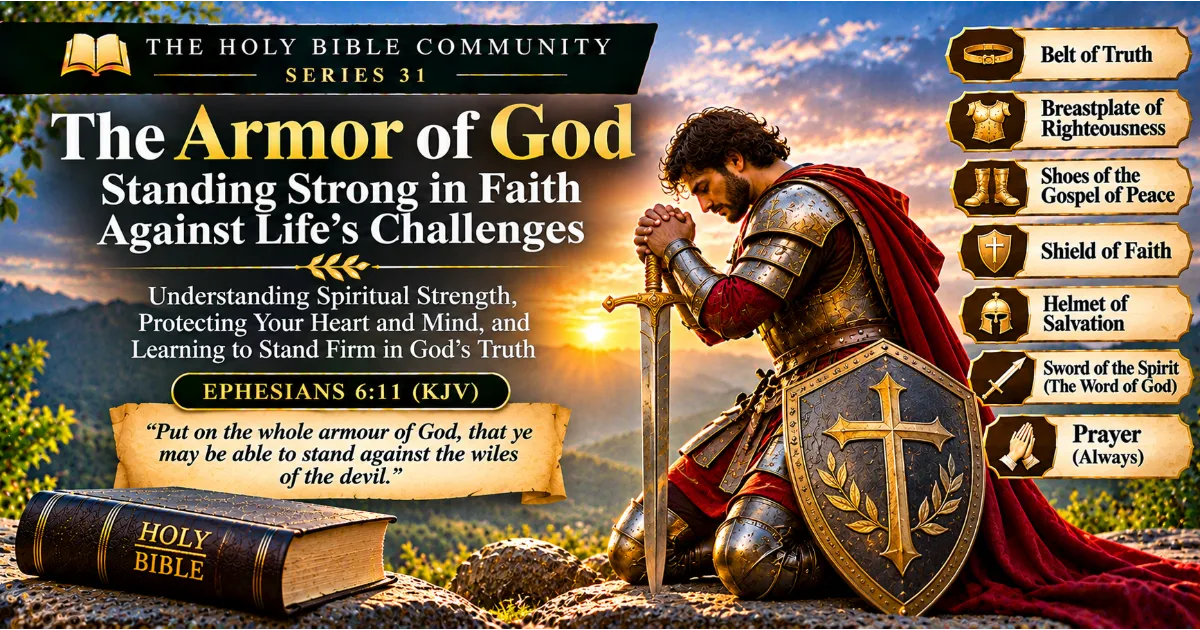
Understanding Spiritual Strength, Protecting Your Heart and Mind, and Learning to Stand Firm in God's Truth
Key Bible Verse: Ephesians 6:11 (KJV)
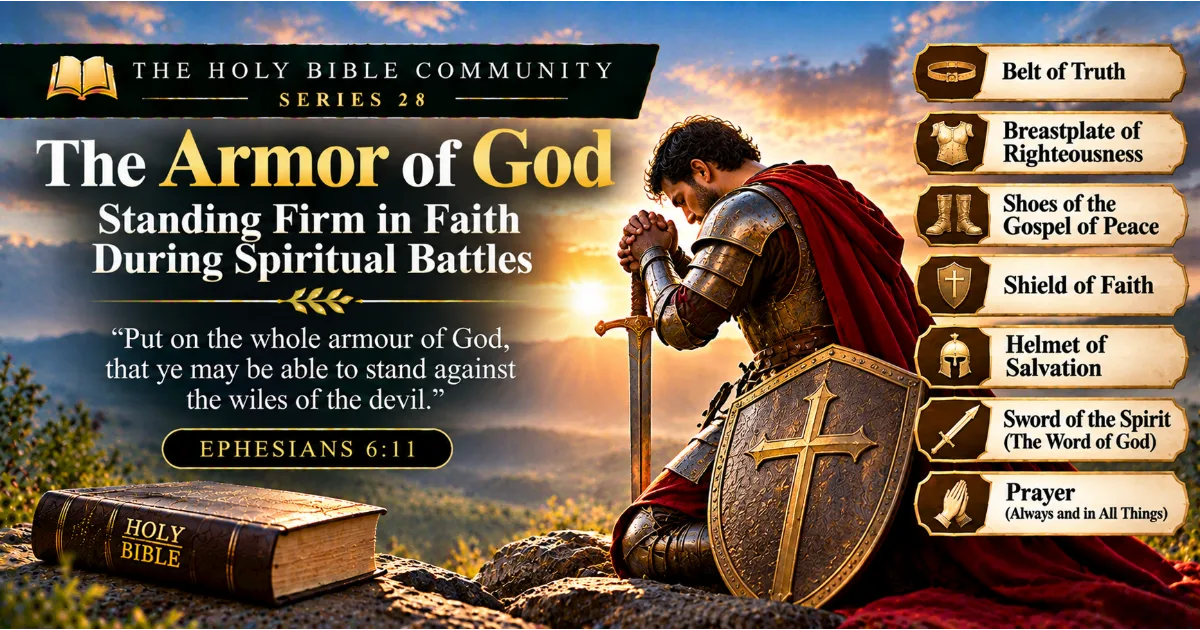
“Put on the whole armour of God, that ye may be able to stand against the wiles of the devil.”
Strength Beyond What the Eyes Can See
Every person experiences struggles that require strength, courage, and perseverance. Some challenges are visible to everyone, such as financial difficulties, family responsibilities, professional pressure, illness, and unexpected changes. Other struggles happen quietly within us. Fear, temptation, discouragement, resentment, doubt, and destructive thoughts can affect our decisions even when nobody else notices what we are facing.
Continue Reading
There are moments when we know what is right but find it difficult to do. We may want to forgive someone but continue carrying resentment. We may want to remain patient but react with anger. We may desire to trust God but become overwhelmed by uncertainty. We may recognise a harmful habit but struggle to leave it behind.
The Bible teaches that Christian life involves more than managing external circumstances. It also involves spiritual vigilance, faith, obedience, and dependence on God. In Ephesians 6:11, the Apostle Paul encourages believers to put on the whole armour of God so that they can stand against the schemes of the devil.
Paul uses the picture of a soldier preparing for battle to explain the spiritual resources God provides. This imagery reminds believers that they should not approach spiritual challenges carelessly. They need truth, righteousness, faith, salvation, the Word of God, and a life of prayer.
The armour of God is not a physical object, nor is it a promise that believers will never experience hardship. It is a spiritual illustration of the qualities and resources that help Christians remain faithful. It teaches us how to stand firm when temptation, deception, fear, and discouragement attempt to weaken our commitment to God.
Understanding this passage is important because spiritual strength is not developed through human confidence alone. It grows through a relationship with God, a willingness to obey His Word, and a daily commitment to live according to His truth.
Understanding the Context of Ephesians 6
Before studying each piece of the armour, it is helpful to understand why Paul wrote these instructions.
The Book of Ephesians explains the identity of believers in Christ and the responsibilities that follow from that identity. Paul discusses God's grace, salvation, unity among believers, spiritual growth, family relationships, and practical Christian conduct.
By the time he reaches Ephesians 6, Paul has already explained how believers should live. He has encouraged them to walk in love, avoid sinful behaviour, speak truthfully, forgive one another, and maintain healthy relationships. He has also discussed responsibilities within families and households.
The passage about the armour of God appears near the end of this teaching. Paul knows that living according to Christian values requires perseverance. Believers face spiritual opposition, temptation, and influences that may encourage them to abandon truth and righteousness.
In Ephesians 6:12, he explains:
“For we wrestle not against flesh and blood, but against principalities, against powers, against the rulers of the darkness of this world, against spiritual wickedness in high places.”
This verse does not encourage Christians to treat other people as enemies. In fact, it helps distinguish spiritual opposition from ordinary human relationships. People may disagree with us, disappoint us, or behave unjustly, but the Christian response should not be hatred or revenge.
The passage calls believers to remain spiritually alert while continuing to practise love, truth, justice, and forgiveness. The armour is given so that they can stand firm, not so that they can become aggressive toward others.
1. The Belt of Truth: Building Your Life on What Is True
Ephesians 6:14 begins by instructing believers to have their loins girt about with truth. In the clothing of a soldier, a belt helped secure garments and prepare the person for movement. Paul uses this image to describe the importance of truth in the Christian life.
Truth is foundational because deception can influence almost every area of our lives. When we accept false beliefs, misunderstand God's character, or justify dishonest behaviour, our spiritual judgement becomes weaker.
The Bible teaches that God is truthful and that His Word provides a foundation for faith. Jesus declared in John 14:6 that He is the way, the truth, and the life. Christian faith is therefore not built on personal imagination or constantly changing opinions. It is rooted in the character of God and the teachings of Jesus Christ.
Wearing the belt of truth also means practising honesty in everyday life. It is not enough to know biblical statements while behaving dishonestly toward others. A Christian should aim to speak truthfully, keep promises, communicate sincerely, and avoid manipulating people for personal advantage.
Truthfulness matters in family relationships, friendships, workplaces, businesses, and communities. A person who regularly lies may temporarily avoid consequences, but dishonesty eventually damages trust. A person who builds relationships on truth creates a stronger foundation for mutual respect.
Truth also helps us recognise misleading thoughts. We may sometimes believe that we are worthless because we have failed, that nobody cares about us because we feel lonely, or that we must compromise our values to succeed. Such thoughts should be examined rather than accepted automatically.
The Word of God helps us evaluate what we believe and distinguish truth from deception. We should develop the habit of examining our thoughts, decisions, and assumptions in the light of Scripture.
2. The Breastplate of Righteousness: Protecting Your Heart Through Right Living
Paul next describes the breastplate of righteousness. A soldier's breastplate protected important parts of the body. In the spiritual illustration, righteousness represents the importance of living according to God's standards.
Righteousness is not simply appearing religious in public. It involves a sincere desire to live in a way that honours God. It includes honesty, purity, fairness, compassion, humility, and obedience.
The Bible teaches that salvation is a gift of grace rather than something earned through perfect behaviour. However, a life transformed by God's grace should produce a growing desire to practise righteousness.
This distinction is important. We do not become acceptable to God by pretending that we have never sinned. We come to Him through faith in Jesus Christ, acknowledge our need for His grace, and seek to live differently because of what He has done for us.
The breastplate of righteousness reminds us that our actions matter. We cannot repeatedly choose dishonesty, cruelty, exploitation, or deliberate wrongdoing while expecting our spiritual lives to remain healthy.
Consider a professional who is offered an opportunity to gain money through dishonest practices. Choosing integrity may appear difficult, especially when others seem to benefit from corruption. Yet righteousness calls us to do what is right even when it costs us something.
In relationships, righteousness means treating people fairly, refusing to manipulate them, and taking responsibility for our actions. In business, it includes honest communication, fair treatment, and respect for commitments. In personal life, it involves resisting harmful habits and choosing behaviour that reflects Christian values.
When we make mistakes, righteousness also requires repentance. We should not hide wrongdoing behind religious language. We should acknowledge our actions, seek forgiveness, make appropriate corrections, and work to avoid repeating the same mistakes.
A heart committed to righteousness is better prepared to resist temptation because it is continually being shaped by God's principles.
3. The Shoes of the Gospel of Peace: Walking With Stability and Readiness
Ephesians 6:15 speaks about having our feet shod with the preparation of the gospel of peace.
A soldier needed suitable footwear to move steadily and remain prepared. Paul uses this picture to show that believers need stability and readiness rooted in the gospel.
The gospel is the good news of what God has done through Jesus Christ. It teaches that salvation is available through God's grace and that reconciliation with God is possible through faith in Christ.
This message of peace should influence how Christians approach life. Instead of allowing every disagreement to become a conflict, believers are called to become people who pursue peace wherever possible.
Peace does not mean avoiding every difficult conversation. Sometimes honesty requires us to address harmful behaviour, correct injustice, or establish boundaries. However, these actions should be guided by truth and wisdom rather than hatred.
Romans 12:18 teaches:
“If it be possible, as much as lieth in you, live peaceably with all men.”
The verse acknowledges that peace is not always fully within our control. We can make sincere efforts to behave peacefully, but we cannot force another person to respond in the same way.
The shoes of the gospel of peace also remind us to be ready to share the message of Christ. Our words and actions should communicate hope rather than unnecessary hostility.
In daily life, this may mean responding calmly when someone speaks harshly, refusing to spread gossip, resolving misunderstandings through honest conversation, and treating people with dignity even when we disagree.
Peace begins with our relationship with God and should influence the way we interact with the world.
4. The Shield of Faith: Protecting Yourself From Doubt and Discouragement
Paul describes the shield of faith as a defence against the fiery darts of the wicked. In ancient warfare, a shield protected soldiers from incoming attacks. Paul uses this image to explain how faith helps believers respond to spiritual challenges.
Faith is trust in God and confidence in His character, even when circumstances are uncertain. It does not mean that we understand every event or that we never experience questions. It means that we continue relying on God rather than allowing fear and deception to control our decisions.
Doubt can take different forms. Sometimes we question whether God hears our prayers. At other times, we wonder whether we can overcome a particular temptation or whether our past mistakes have made restoration impossible.
Discouragement may also come through repeated setbacks. A person who has experienced failure may begin believing that nothing will ever improve. Someone facing rejection may assume that they have no value. A person who has been hurt may find it difficult to trust anyone.
Faith helps us respond to these struggles with a wider perspective. We remember God's promises, seek His wisdom, and continue taking responsible steps.
The shield of faith does not mean that Christians should ignore facts or reject practical help. If we are facing financial difficulty, we may need careful planning. If we are experiencing emotional distress, we may benefit from support from trusted people or qualified professionals. If we are dealing with a difficult relationship, we may need wise boundaries.
Faith and practical responsibility can work together. Trusting God does not require us to stop thinking carefully or seeking appropriate assistance.
We can strengthen our faith by reading Scripture, remembering God's faithfulness, praying regularly, and spending time with believers who encourage spiritual growth.
5. The Helmet of Salvation: Protecting Your Mind With the Hope of Christ
The helmet of salvation is another important part of the armour. A helmet protects the head, and Paul uses this image to describe the importance of salvation and the hope it provides.
The mind influences how we understand ourselves, others, and the circumstances around us. When our thinking becomes dominated by fear, guilt, bitterness, or false beliefs, our decisions may be affected.
The message of salvation reminds believers that their identity is not defined entirely by past failures, social status, financial condition, or the opinions of others. Through Jesus Christ, they receive the opportunity for forgiveness, reconciliation with God, and a new life.
This hope is especially important when we struggle with guilt. Some people continue punishing themselves mentally for mistakes they have already acknowledged and repented of. They may believe that God can forgive others but cannot forgive them.
The Bible teaches that God's mercy is available to those who sincerely turn to Him. First John 1:9 explains that if we confess our sins, God is faithful and just to forgive us and cleanse us from all unrighteousness.
This does not remove the need to accept consequences or repair harm where possible. However, it reminds us that repentance should lead toward restoration rather than permanent hopelessness.
The helmet of salvation also encourages us to guard our minds against destructive influences. We should be thoughtful about the messages we consume, the conversations we repeatedly participate in, and the beliefs we allow to shape our identity.
Not every negative thought represents spiritual opposition, and not every emotional struggle should be interpreted as a spiritual attack. However, Christians should recognise the importance of healthy thinking, biblical truth, and appropriate support.
6. The Sword of the Spirit: Using God's Word to Stand Firm
Ephesians 6:17 describes the sword of the Spirit as the Word of God. Unlike the other pieces of armour, which are primarily defensive, the sword represents an active instrument.
The Word of God provides guidance, correction, wisdom, and encouragement. It helps believers recognise temptation and respond according to God's truth.
One of the clearest examples of Jesus using Scripture during temptation appears in Matthew 4. When Jesus was tempted in the wilderness, He responded by referring to the Word of God. His example demonstrates the importance of knowing Scripture and understanding its meaning.
However, using the Bible as the sword of the Spirit does not mean taking isolated verses out of context to justify personal opinions. Scripture should be read carefully, understood within its context, and applied faithfully.
Knowing a few familiar verses is valuable, but spiritual growth requires more than memorising isolated statements. We should develop a deeper understanding of biblical teaching so that we can recognise how different passages fit together.
For example, a person who knows biblical teaching about forgiveness should also understand the importance of truth, accountability, and wise boundaries. Someone who reads about faith should also recognise the Bible's teaching about responsibility and perseverance.
The Word of God should influence our decisions rather than simply decorate our conversations.
Make time to read Scripture regularly. Reflect on what a passage teaches about God, what it reveals about human behaviour, and how it should influence your actions. Memorise verses that provide guidance during temptation, fear, and discouragement.
When God's Word becomes part of our thinking, we become better prepared to recognise deception and choose what is right.
7. Prayer: Staying Connected to God at Every Moment
Immediately after describing the armour, Paul emphasises the importance of prayer. Ephesians 6:18 encourages believers to pray always with all prayer and supplication in the Spirit.
This instruction shows that the armour of God is not a collection of independent qualities. Prayer is essential because it keeps believers dependent on God.
Prayer is not limited to formal moments or special occasions. It can become a regular part of everyday life. We can pray when making decisions, facing temptation, experiencing uncertainty, thanking God, or seeking strength to fulfil our responsibilities.
Paul also encourages believers to remain watchful and continue praying for all the saints. This reminds us that prayer is not exclusively about personal needs. It should include concern for other people.
We can pray for family members, friends, leaders, people experiencing illness, those facing financial difficulties, and believers who are experiencing opposition. We can also pray for wisdom to respond to difficult situations with compassion and integrity.
Prayer should be sincere rather than mechanical. God does not need impressive language or lengthy speeches. We can approach Him honestly, acknowledge our weaknesses, express gratitude, and ask for guidance.
A consistent prayer life helps us remember that spiritual strength does not come entirely from personal determination. We need God's wisdom and grace every day.
8. Spiritual Warfare Does Not Mean Fighting Other People
One of the most important lessons in Ephesians 6 is the distinction between spiritual opposition and human relationships.
Paul writes that our struggle is not against flesh and blood. This means that Christians should not treat other people as enemies simply because they disagree with us, criticise us, or belong to a different background.
It is possible to oppose wrongdoing without hating the person who commits it. We can disagree firmly while remaining respectful. We can establish boundaries without becoming cruel. We can defend truth without using manipulation or violence.
Sometimes religious language is misused to justify hostility. People may label anyone who disagrees with them as an enemy of God. Such behaviour can damage relationships and create unnecessary conflict.
The armour of God should produce spiritual maturity, not arrogance. A believer who understands the passage should become more committed to truth, righteousness, peace, and prayer.
Jesus taught His followers to love their enemies and pray for those who persecute them. This teaching does not mean that wrongdoing should be ignored. It means that our response must not be controlled by hatred or revenge.
When facing conflict, ask whether your words and actions reflect the character of Christ. Are you seeking truth or simply trying to win an argument? Are you protecting someone from harm or trying to humiliate another person? Are you responding with wisdom or reacting from anger?
These questions help us apply the armour of God in real relationships.
9. Recognising the Everyday Challenges That Test Our Faith
Spiritual challenges do not always appear as dramatic events. They may emerge through ordinary decisions and repeated patterns of behaviour.
Temptation may come through the opportunity to lie for personal benefit. Pride may develop when success makes us believe that we are superior to others. Envy may arise when someone receives an opportunity we wanted. Bitterness may grow when we refuse to address unresolved hurt.
Fear may prevent us from doing what is right. Discouragement may make us abandon responsibilities too quickly. Anger may damage relationships when we allow it to control our words.
These situations remind us that spiritual vigilance is necessary in everyday life.
The armour of God provides a framework for responding. Truth helps us reject deception. Righteousness guides our behaviour. The gospel of peace influences our relationships. Faith helps us trust God. Salvation reminds us of our identity in Christ. Scripture provides guidance. Prayer keeps us connected to God.
The goal is not to become suspicious of every person or situation. It is to become more aware of the values and influences shaping our decisions.
A spiritually alert person is not constantly frightened. Instead, such a person learns to remain grounded in God's Word and prepared to respond wisely.
10. Putting on the Whole Armour, Not Just the Parts We Prefer
Paul specifically tells believers to put on the whole armour of God. This detail matters because spiritual growth requires a balanced Christian life.
Some people strongly emphasise faith but neglect truth and accountability. Others focus on knowledge but fail to practise love and righteousness. Some speak about peace but avoid necessary conversations. Others emphasise spiritual activity while neglecting prayer and humility.
The armour is presented as a complete picture. Each part contributes to the believer's ability to stand firm.
Truth without love can become harsh. Love without truth can become misleading. Faith without responsibility can become careless. Knowledge without humility can become pride. Prayer without obedience can become empty routine.
A mature Christian life brings these qualities together.
We should therefore examine our spiritual habits honestly. Are we learning Scripture but failing to apply it? Are we praying regularly but continuing to practise dishonesty? Are we talking about forgiveness while holding on to hatred? Are we seeking God's direction while refusing to accept correction?
Putting on the whole armour means allowing every part of our lives to be shaped by God's truth.
11. Standing Firm When Life Becomes Difficult
Ephesians 6 repeatedly uses the language of standing. Paul wants believers to remain firm when spiritual challenges arise.
Standing firm does not mean that we will never feel weak. It does not mean that we will never experience fear, sadness, or uncertainty. It means that we continue trusting God and holding on to our faith even when circumstances become difficult.
Consider a person who is facing professional pressure to act dishonestly. Standing firm may mean refusing to participate, even when the decision carries personal costs.
A person who has been hurt may need to resist the temptation to seek revenge. Standing firm may mean choosing a response that protects personal wellbeing without becoming consumed by bitterness.
Someone experiencing repeated disappointment may need to continue praying, seeking wise counsel, and taking responsible steps rather than allowing discouragement to destroy hope.
Standing firm also means knowing when to ask for help. Christian strength does not require pretending that we can manage every challenge alone. We can seek encouragement from trusted believers, family members, pastors, counsellors, and qualified professionals when appropriate.
There is no shame in acknowledging weakness. In fact, recognising our limitations can lead us toward greater dependence on God.
The purpose of the armour is not to make believers appear invulnerable. It is to help them remain faithful through the realities of life.
12. Practical Ways to Put on the Armour of God Every Day
The armour of God becomes meaningful when we apply its lessons consistently.
Begin each day with prayer. Ask God to guide your thoughts, words, decisions, and relationships. Acknowledge the areas where you need His wisdom and strength.
Spend time reading Scripture. Choose a passage, understand its context, and reflect on how it applies to your circumstances. Do not treat Bible reading as a task to finish quickly. Allow the message to influence your thinking.
Practise truthfulness. Be honest in your communication, avoid spreading rumours, and take responsibility for your commitments. When you make a mistake, acknowledge it rather than creating excuses.
Choose righteousness in ordinary decisions. Treat people fairly, resist dishonest opportunities, and examine your motives. Remember that spiritual character is developed through repeated choices.
Pursue peace in relationships. Avoid unnecessary arguments, listen carefully, and communicate respectfully. When conflict cannot be avoided, address it with courage and wisdom.
Strengthen your faith by remembering God's character and promises. When fear or discouragement arises, return to Scripture and seek support from people who encourage healthy spiritual growth.
Protect your mind by being thoughtful about what you consume. Avoid repeatedly exposing yourself to content that encourages hatred, envy, dishonesty, or destructive behaviour.
Finally, remain connected with other believers. Christian faith is not intended to be lived in complete isolation. Fellowship, encouragement, accountability, and shared prayer can strengthen us during difficult seasons.
These practices do not guarantee a life without problems. They help us develop a stronger foundation for responding to problems faithfully.
Conclusion: Stand Strong in the Strength God Provides
The armour of God is one of the most powerful illustrations of spiritual readiness in the Bible. Through the imagery of a soldier's equipment, Paul reminds believers that Christian life requires truth, righteousness, peace, faith, salvation, Scripture, and prayer.
Each part teaches an important lesson. The belt of truth calls us to build our lives on what is real and trustworthy. The breastplate of righteousness encourages us to live with integrity. The shoes of the gospel of peace prepare us to pursue peace and share the message of Christ. The shield of faith helps us trust God when fear and doubt arise. The helmet of salvation reminds us of our identity and hope in Jesus. The sword of the Spirit gives us God's Word as a source of guidance and strength. Prayer keeps us dependent on Him.
These teachings are not meant to make us suspicious, aggressive, or fearful. They should help us become more spiritually mature, more compassionate, and more faithful.
Remember that other people are not the enemy. We can oppose wrongdoing without becoming hateful. We can establish boundaries without seeking revenge. We can defend truth while treating others with dignity.
There will be days when you feel strong and days when you feel weak. There will be moments when faith seems easy and moments when uncertainty challenges you. Through every season, remember that your strength does not come from personal ability alone. God invites you to depend on Him.
Do not neglect the small decisions that shape your spiritual life. Choose honesty when dishonesty seems easier. Choose forgiveness when resentment tries to control you. Choose peace when anger encourages conflict. Choose faith when fear makes the future uncertain. Return to God's Word when misleading thoughts begin to influence your decisions.
Most importantly, remember that the armour of God is something we are instructed to put on continually. Spiritual readiness is not a single event. It is a daily commitment to walk with God and live according to His truth.
Stand firm in faith. Protect your heart with righteousness. Guard your mind with the hope of salvation. Let God's Word guide your decisions, and remain constant in prayer. Whatever challenges come, seek your strength from the Lord.
A Prayer for Spiritual Strength and the Armour of God
Heavenly Father, we come before You with humble hearts, recognising that we need Your wisdom, protection, and strength every day.
Thank You for Your Word and for the spiritual guidance You have given us through the teachings of Jesus Christ and the Apostles. Help us understand the meaning of the armour of God and apply its lessons faithfully in our lives.
Lord, help us put on the belt of truth. Protect us from deception, dishonesty, and misleading thoughts. Teach us to speak truthfully, act sincerely, and build our relationships on honesty.
Clothe us with the breastplate of righteousness. Help us choose what is right even when it is difficult. Give us courage to resist temptation, humility to acknowledge our mistakes, and wisdom to make decisions that honour You.
Prepare our feet with the gospel of peace. Help us become people who bring encouragement rather than unnecessary conflict. Teach us to speak with kindness, pursue reconciliation where possible, and establish healthy boundaries when necessary.
Strengthen our faith so that fear, doubt, and discouragement do not control our lives. Remind us of Your faithfulness when circumstances become uncertain. Help us trust You while continuing to act responsibly.
Protect our minds with the hope of salvation. When guilt, shame, or negative thoughts overwhelm us, remind us of Your mercy and the forgiveness available through Jesus Christ. Help us reject thoughts that lead us away from Your truth.
Give us a deeper understanding of Your Word. Teach us to read Scripture carefully, remember its lessons, and apply it to our everyday decisions. Let Your truth guide our actions and shape our character.
Lord, strengthen our prayer life. Help us approach You regularly with thanksgiving, confession, requests, and concern for others. Teach us to pray for our families, friends, communities, and everyone who is facing difficult circumstances.
Protect us from pride, hatred, bitterness, and the desire for revenge. Help us remember that people are not our enemies. Give us the wisdom to stand for what is right while continuing to show compassion and respect.
When we feel weak, remind us that Your strength is sufficient. When we face temptation, help us choose obedience. When we experience disappointment, renew our hope. When we encounter conflict, guide us toward truth and peace.
May our lives reflect the character of Jesus Christ. Help us remain faithful in every season and stand firm in the spiritual strength You provide.
In the precious name of Jesus Christ, we pray.
Amen.
#ArmourOfGod #Ephesians611 #SpiritualStrength #ChristianFaith #WordOfGod