
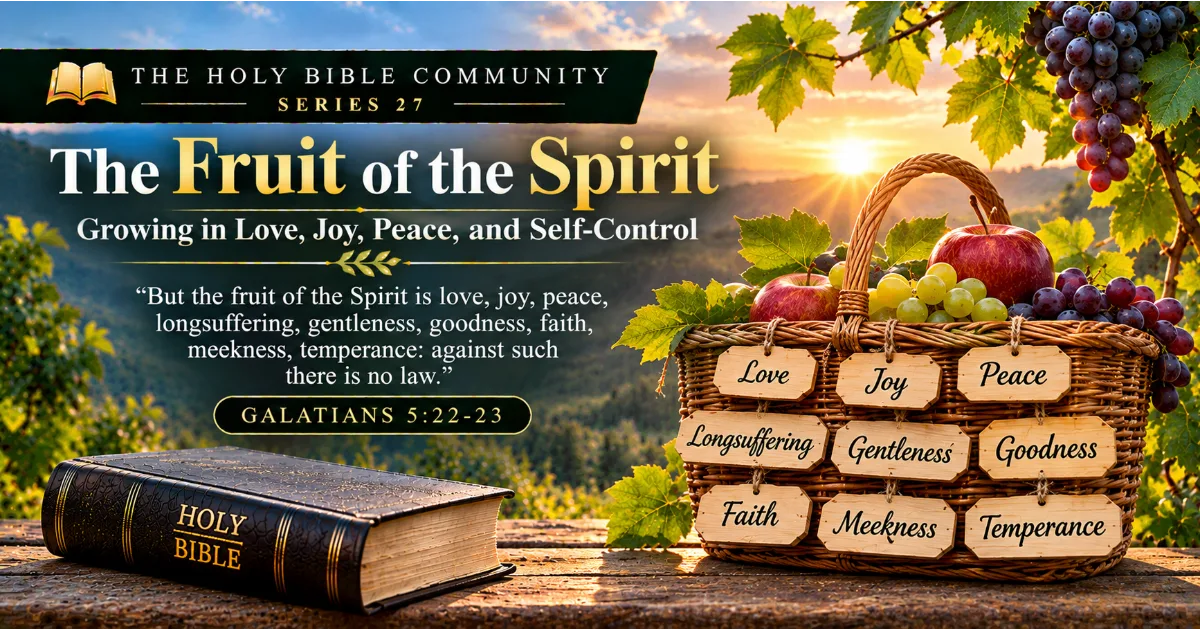
Understanding How the Holy Spirit Transforms Our Character and Helps Us Reflect the Nature of Christ
Key Bible Verse: Galatians 5:22-23 (KJV)
“But the fruit of the Spirit is love, joy, peace, longsuffering, gentleness, goodness, faith, meekness, temperance: against such there is no law.”
The Beauty of a Spirit-Led Life
Every person wants to become better in some way. We want to be more patient with our families, kinder to people around us, calmer during difficult situations, more generous toward those in need, and stronger when facing temptation. We often make promises to ourselves that we will change our reactions, control our anger, stop worrying, forgive more easily, and become more understanding. Yet, despite our best intentions, we sometimes find ourselves repeating the same mistakes. We react before thinking, allow frustration to influence our words, become discouraged by difficulties, or struggle to show kindness when someone disappoints us.
Continue Reading
The Bible teaches that genuine spiritual transformation is not simply the result of human determination. It comes through a growing relationship with God and the work of the Holy Spirit within us. In Galatians 5:22-23, the Apostle Paul describes the qualities that become visible in the life of a person who walks according to the Spirit. These qualities are known as the fruit of the Spirit. They include love, joy, peace, longsuffering, gentleness, goodness, faith, meekness, and temperance.
These qualities are not merely good manners or personality traits. They represent a deeper transformation of the heart. A person may appear polite while secretly holding resentment. Someone may smile in public while being consumed by bitterness. Another person may demonstrate confidence but struggle to remain peaceful when life becomes uncertain. The fruit of the Spirit goes beyond outward appearances because it concerns the condition of our hearts and the way our lives reflect the character of Christ.
Paul uses the word fruit in the singular. This is meaningful because these qualities belong together. They are not separate achievements from which believers can select only the qualities they find convenient. A Spirit-led life gradually develops all of them. Our circumstances may reveal areas where we still need to grow, but God continues to work within us as we surrender our attitudes, decisions, habits, and relationships to Him.
The fruit of the Spirit is not produced through pressure, comparison, or the desire to impress others. It grows through a life connected to God. Just as a healthy tree produces fruit because it is rooted, nourished, and alive, spiritual fruit becomes visible when our lives remain rooted in Christ.
Understanding the Context of Galatians 5
To understand the fruit of the Spirit, we must first understand why Paul wrote about it. In his letter to the Galatians, Paul addressed the relationship between faith, freedom, and the Christian life. Some believers were being influenced by teachings that placed excessive importance on outward religious requirements as a way of establishing righteousness before God.
Paul reminded them that salvation is received through faith in Jesus Christ, not earned through human achievement. Christian freedom, however, does not mean living without responsibility or allowing every desire to control our behaviour. Freedom in Christ is not an invitation to selfishness. It is an opportunity to live according to the leading of the Holy Spirit.
In Galatians 5, Paul contrasts the works of the flesh with the fruit of the Spirit. The works of the flesh include attitudes and behaviours that arise from a life governed by selfish desires, such as hatred, jealousy, anger, selfish ambition, envy, and other destructive actions. These behaviours damage relationships and create distance between people and God.
The fruit of the Spirit describes a different way of living. Instead of allowing selfish desires to dominate our decisions, we learn to respond through love, patience, kindness, faithfulness, and self-control. This transformation does not happen because we become perfect through our own efforts. It happens as we depend on the Spirit and allow God's Word to shape our thinking.
Paul's message is especially important because it reminds us that Christianity is not only about what we believe but also about how our beliefs influence the way we live. Our faith should gradually become visible through our character, our relationships, our choices, and our treatment of others.
1. Love: The Foundation of a Christ-Centred Life
Love is the first quality mentioned in the fruit of the Spirit, and it is central to the teachings of Jesus. Biblical love is much deeper than affection, attraction, or emotional attachment. It is a decision to seek the good of others with sincerity, compassion, and integrity.
Jesus demonstrated this love through His life and ministry. He cared for the sick, welcomed people who were rejected by society, showed compassion toward those who were suffering, and taught His followers to love even their enemies. His love was not limited to people who agreed with Him or treated Him well.
In our daily lives, love becomes visible through ordinary decisions. It appears when we listen patiently to someone who needs to speak, help a person without expecting recognition, speak truth without unnecessary cruelty, or show consideration toward someone whose circumstances are different from our own.
Love also requires forgiveness. Human relationships involve misunderstandings, disappointments, and mistakes. Without forgiveness, resentment can gradually influence our thoughts and actions. Forgiveness does not mean pretending that wrongdoing never happened or accepting repeated harmful behaviour. It means refusing to allow hatred and revenge to control our hearts while maintaining appropriate boundaries where necessary.
A loving person does not always agree with everyone. Genuine love can include correction, honest disagreement, and difficult conversations. The difference lies in the intention and manner of communication. Love seeks restoration and truth rather than humiliation or personal victory.
When we ask God to develop love within us, we are asking Him to transform the way we see and treat people. We are learning to move beyond selfishness and become more compassionate in our everyday relationships.
2. Joy: Finding Gladness Beyond Circumstances
Joy is different from temporary happiness. Happiness is often connected to circumstances. We may feel happy when we receive good news, achieve a goal, spend time with loved ones, or experience financial security. When circumstances change, those feelings may disappear.
Biblical joy has a deeper foundation. It comes from knowing God, trusting His character, and recognising that His presence remains with us through changing seasons of life.
This does not mean that believers must always appear cheerful. Scripture contains honest expressions of grief, sorrow, disappointment, and suffering. Jesus Himself wept. The Psalms include prayers of anguish and questions asked during painful circumstances. Faith does not require us to deny our emotions.
Christian joy means that suffering does not have to destroy our hope. We can experience sadness while still trusting God. We can face uncertainty without believing that our lives have lost all meaning. We can acknowledge disappointment while remembering that our relationship with God is not dependent on receiving everything we desire.
Joy grows when we develop gratitude. Instead of focusing exclusively on what is missing, we begin recognising the blessings already present in our lives. This may include family, friendship, daily provision, opportunities to learn, moments of peace, and the strength to continue through difficult days.
Gratitude does not mean ignoring genuine problems. It means refusing to allow problems to become the only things we notice. A grateful heart learns to recognise God's goodness even when the journey is not easy.
When we cultivate joy through the Holy Spirit, our hope becomes less dependent on temporary success and more firmly rooted in God's faithfulness.
3. Peace: Resting in God's Presence
Peace is one of the qualities that many people desire most. We live in a world filled with responsibilities, competition, uncertainty, financial pressure, personal conflicts, and constant demands for attention. Even when everything appears normal externally, our minds may remain occupied with worries about the future.
The peace produced by the Holy Spirit is not simply the absence of problems. It is an inner stability that comes from trusting God even when problems remain unresolved.
Jesus spoke about peace in John 14:27, reminding His disciples that the peace He gives is different from the peace offered by the world. The world's peace often depends on favourable circumstances. We may feel secure when our plans succeed, our finances are stable, and our relationships are comfortable. But when those conditions change, our sense of security can disappear.
The peace of Christ has a different foundation. It grows through prayer, trust, obedience, and confidence in God's presence.
This peace does not prevent us from taking practical action. If we have made a mistake, we should accept responsibility and correct it where possible. If a relationship requires an honest conversation, we should not use prayer as an excuse to avoid it. If a difficult decision needs careful consideration, we should seek wisdom rather than act carelessly.
Peace helps us approach these responsibilities without allowing fear to control every decision.
We can nurture peace by spending time in prayer, reading Scripture, limiting unnecessary distractions, practising gratitude, and learning to surrender what we cannot control. When anxiety arises, we can bring our concerns honestly before God and ask for wisdom to take the next responsible step.
4. Longsuffering: Developing Patience During Difficult Times
Longsuffering is often understood as patience, particularly when dealing with difficult people or challenging circumstances. It is the ability to endure without quickly becoming angry, bitter, or discouraged.
Patience is easy when everything happens according to our expectations. It becomes difficult when people disappoint us, plans are delayed, progress is slow, or circumstances require more endurance than we expected.
The Bible repeatedly demonstrates God's patience toward humanity. Throughout Scripture, people make mistakes, disobey His instructions, and struggle with faith. Yet God continues to call people toward repentance, restoration, and a closer relationship with Him.
Developing patience means learning not to respond immediately to every frustration. It means allowing ourselves time to think before speaking, listening before judging, and seeking understanding before assuming the worst.
In family relationships, patience may be needed when children make mistakes, parents require support, or spouses disagree. In professional life, it may be necessary when colleagues work differently, projects experience delays, or responsibilities become demanding. In friendships, patience helps us recognise that every person has weaknesses and difficult seasons.
However, patience should not be confused with accepting abuse or remaining in dangerous situations. Biblical patience does not require someone to tolerate violence, exploitation, or repeated mistreatment. We can practise patience while establishing healthy boundaries and seeking appropriate help.
Longsuffering teaches us to respond with wisdom rather than allowing temporary frustration to determine our behaviour.
5. Gentleness: Strength Expressed Through Kindness
Gentleness is sometimes misunderstood as weakness. In reality, gentleness requires considerable strength because it involves controlling how we use our words, influence, authority, and emotions.
A gentle person does not need to dominate every conversation or prove superiority over others. Such a person can disagree without insulting, correct without humiliating, and lead without creating unnecessary fear.
Jesus demonstrated gentleness in His interactions with people. He showed compassion toward those who were suffering and welcomed those who came to Him seeking help. His gentleness did not mean that He avoided truth or ignored wrongdoing. He spoke firmly when necessary, but His actions were guided by righteousness rather than personal pride.
In everyday life, gentleness can be seen in the way we communicate with people who make mistakes. Instead of immediately criticising someone, we can explain the problem calmly. Instead of responding to an angry message with another angry message, we can pause and choose a more thoughtful response.
Gentleness also matters in how we treat ourselves. Some people speak to themselves with constant criticism, believing that harsh self-judgment will make them stronger. But growth requires honesty accompanied by grace. We should recognise our mistakes without defining our entire identity by them.
A gentle spirit makes room for understanding, learning, and restoration. It allows truth to be communicated in a manner that respects human dignity.
6. Goodness: Choosing What Is Right
Goodness refers to moral integrity and a sincere desire to do what is right. It is more than appearing respectable or performing occasional acts of kindness. Goodness concerns the values that guide our decisions, including the choices we make when nobody is watching.
A person who develops goodness through the Spirit seeks to act honestly, fairly, and compassionately. Such a person does not deliberately take advantage of others for personal benefit. Goodness influences how we handle money, fulfil responsibilities, treat employees, conduct business, and respond to people who cannot offer us anything in return.
It also involves courage. Sometimes doing what is right requires us to refuse an opportunity that appears profitable but involves dishonesty. We may need to admit a mistake when hiding it would be easier. We may have to defend someone who is being treated unfairly, even when doing so is uncomfortable.
Goodness does not mean believing that we are better than others. It should produce humility because we recognise our own need for God's grace. Instead of judging everyone around us, we should first examine our own actions.
We can develop goodness by allowing Scripture to guide our conscience, choosing honesty in small matters, fulfilling our commitments, and considering how our decisions affect other people.
7. Faith: Remaining Faithful and Trustworthy
The word translated as faith in Galatians 5:22 is often understood in the sense of faithfulness. It includes trust in God as well as reliability, loyalty, and consistency in the way we live.
Faithfulness is demonstrated when our actions remain connected to our values. It is easy to make promises during emotional moments, but faithfulness is revealed when we continue to fulfil those promises over time.
In our relationship with God, faithfulness means continuing to trust Him and seek His guidance through changing circumstances. It does not mean that we will never have questions or moments of uncertainty. Biblical faith can coexist with honest questions. What matters is that we continue turning toward God rather than abandoning our relationship with Him whenever life becomes difficult.
Faithfulness is also important in human relationships. A faithful friend keeps confidence, offers support, and does not disappear whenever circumstances become inconvenient. A faithful spouse takes commitment seriously. A faithful employee or business leader acts responsibly and honestly.
Consistency is an important expression of faithfulness. We do not need to perform extraordinary acts every day. Sometimes faithfulness is demonstrated through small responsibilities completed with sincerity.
When the Holy Spirit develops faithfulness within us, people can increasingly trust our words and actions. Our lives become more dependable because our commitments are guided by integrity rather than convenience.
8. Meekness: Living With Humility and Self-Control
Meekness is not weakness, fearfulness, or the inability to defend what is right. It is strength governed by humility and submission to God.
A meek person does not need to prove personal importance through constant arguments, pride, or aggressive behaviour. Such a person understands that knowledge, authority, and influence should be used responsibly.
Meekness helps us remain teachable. When someone points out a mistake, we can consider the correction rather than immediately becoming defensive. When we receive praise, we can remain grateful without allowing admiration to become pride. When we experience success, we can recognise that our abilities and opportunities are gifts that should be used wisely.
Jesus described Himself as meek and lowly in heart in Matthew 11:29. His humility did not prevent Him from speaking truth or fulfilling His mission. Instead, His strength was expressed through obedience to the Father and compassion toward others.
Meekness also influences the way we handle conflict. Instead of trying to win every argument, we learn to recognise when silence, explanation, apology, or a respectful disagreement is the wiser response.
A humble person can acknowledge that others may have knowledge and perspectives worth considering. This attitude helps us grow spiritually, emotionally, and intellectually.
9. Temperance: Practising Self-Control
Temperance refers to self-control. It is the ability to govern our desires, impulses, emotions, and behaviour instead of allowing them to control us.
Self-control is necessary in almost every area of life. It influences what we say when we are angry, how we use our money, how we respond to temptation, how we manage our time, and how we behave when nobody is monitoring us.
Modern life presents many opportunities for distraction and impulsive decisions. We may spend hours scrolling through social media, react emotionally to online arguments, purchase things we do not need, or allow temporary desires to interfere with important responsibilities.
Temperance helps us pause and consider the consequences of our actions. It reminds us that not every desire must be satisfied and not every emotion must become an action.
Self-control does not mean suppressing every feeling. Emotions provide information about our experiences, but they should not always determine our decisions. We can feel angry without becoming cruel. We can experience fear without surrendering to it. We can feel disappointed without treating others unfairly.
Developing temperance requires daily practice. We can establish healthy routines, avoid situations that repeatedly lead us toward temptation, seek accountability, and pray for strength when our willpower feels weak.
The Holy Spirit helps us develop a life in which our decisions are increasingly guided by wisdom and obedience rather than uncontrolled impulses.
The Fruit of the Spirit Begins With a Relationship With God
One of the most important lessons in Galatians 5 is that spiritual fruit cannot be manufactured through outward performance alone. A person can imitate certain behaviours for a limited time, but genuine transformation begins within the heart.
Jesus explained this principle through the image of a vine and its branches in John 15. He taught that His followers must abide in Him because a branch cannot produce fruit independently of the vine.
This illustration helps us understand why a relationship with Christ is essential. We cannot consistently develop Christlike character while deliberately ignoring the One whose character we are called to reflect.
Abiding in Christ involves prayer, Scripture, obedience, trust, worship, and a willingness to follow His teachings. These practices are not attempts to purchase God's love. They are ways of remaining connected to Him and allowing His Word to shape our lives.
A healthy spiritual life also requires honesty. We should not pretend that we have already developed every quality perfectly. There may be areas where we struggle with impatience, jealousy, anger, pride, or a lack of self-control. Recognising these weaknesses is not a reason to abandon hope. It is an opportunity to seek God's help and begin growing.
Why Spiritual Growth Takes Time
Many people become discouraged because they expect immediate transformation. They pray for patience but become frustrated when difficult situations continue. They ask for peace but still experience anxiety. They desire forgiveness but find that painful memories remain.
Spiritual growth often happens gradually. Just as a tree requires time, nourishment, and suitable conditions to mature, the development of Christian character involves a continuing process of learning and transformation.
There may be moments when we recognise significant progress. There may also be days when old habits return and remind us that we still need God's grace. The important thing is to keep returning to Him with sincerity.
Growth should not be measured only by how we feel. It should also be examined through our choices. Are we becoming more patient with others? Are we taking responsibility for our mistakes? Are we becoming more honest? Are we learning to control our reactions? Are we treating people with greater compassion?
These questions help us recognise whether our faith is influencing our everyday behaviour.
How to Cultivate the Fruit of the Spirit in Daily Life
Developing the fruit of the Spirit requires a willingness to bring ordinary decisions before God. We do not need to wait for extraordinary spiritual experiences before practising love, patience, or self-control.
Begin each day with prayer. Ask God to guide your thoughts, words, and actions. Rather than praying only for personal success, ask for a heart that reflects the character of Christ.
Spend time reading Scripture thoughtfully. Consider not only what a passage says but also how it applies to your relationships and responsibilities. The Bible should influence the way we respond to real situations.
Practise gratitude. At the end of each day, reflect on the blessings you experienced and the ways God helped you through difficulties. Gratitude can redirect attention away from constant dissatisfaction.
Learn to pause before reacting. When you feel angry or disappointed, take time to consider your response. Ask whether your words will help resolve the situation or make it worse.
Examine your relationships. Consider whether the people around you experience kindness, honesty, patience, and respect through your behaviour. If you have hurt someone, be willing to apologise sincerely.
Accept correction. Spiritual maturity requires humility. We should be willing to learn from Scripture, wise guidance, and honest feedback.
Finally, remain consistent. Do not expect every effort to produce immediate results. Continue seeking God, practising obedience, and allowing the Holy Spirit to work within you.
The Fruit of the Spirit in Family and Relationships
Our spiritual character is often tested most clearly within our closest relationships. It is relatively easy to appear patient and kind in public, but family life may reveal our weaknesses.
Love helps family members care for one another beyond convenience. Joy encourages gratitude for shared moments. Peace helps people approach disagreements without unnecessary hostility. Patience makes room for different personalities, ages, and experiences.
Gentleness influences the way parents guide children and the way children speak to their parents. Goodness encourages honesty and responsibility within the household. Faithfulness strengthens trust between family members. Meekness helps people admit when they are wrong, while temperance prevents emotions from controlling conversations.
These qualities do not eliminate disagreements. Healthy families can still experience conflict, different opinions, and difficult seasons. The difference is found in how people respond to those challenges.
A family shaped by Christian values should become a place where truth and compassion can exist together. People should be able to admit mistakes, seek forgiveness, establish appropriate boundaries, and work toward restoration.
The Fruit of the Spirit in the Workplace and Society
Faith should influence more than our private spiritual activities. It should also shape how we participate in professional and social life.
Love encourages us to treat colleagues, customers, employees, and business partners with dignity. Joy helps us remain grateful and constructive even when work becomes demanding. Peace allows us to approach pressure without spreading unnecessary conflict.
Patience is important when working with people who have different abilities, communication styles, and expectations. Gentleness helps us provide feedback respectfully. Goodness encourages ethical decisions, even when dishonesty appears profitable.
Faithfulness makes us reliable. Meekness helps us accept responsibility and learn from others. Temperance helps us manage our time, emotions, and resources responsibly.
A Christian does not need to constantly announce personal beliefs to demonstrate faith. Character can communicate the values we follow. When people experience fairness, honesty, compassion, and reliability through our actions, they see the practical influence of our faith.
When You Struggle to Display the Fruit of the Spirit
There will be times when you fail to respond in the way you know you should. You may speak harshly, lose patience, become jealous, or allow fear to influence a decision. Such moments can create disappointment and make you question your spiritual progress.
When this happens, do not hide from God. Acknowledge what went wrong and seek His forgiveness. If your actions harmed another person, take responsibility and make an effort to repair the damage where possible.
Repentance is more than feeling guilty. It involves turning away from harmful behaviour and choosing a different direction. Sometimes this requires practical changes, such as seeking wise counsel, establishing boundaries, changing unhealthy routines, or asking for support.
Remember that spiritual maturity is not demonstrated by never making mistakes. It is demonstrated through a growing willingness to recognise wrongdoing, return to God, learn, and change.
Do not compare your spiritual journey with someone else's. Every person has a different history, set of struggles, and areas requiring growth. Comparison can produce pride or discouragement, neither of which helps us develop Christlike character.
Focus on your relationship with God and the responsibilities He has placed before you.
A Life That Reflects Christ
The fruit of the Spirit offers a powerful picture of the kind of life God desires to develop within His people. Love changes the way we treat others. Joy gives us hope beyond circumstances. Peace strengthens us during uncertainty. Patience helps us endure difficult situations. Gentleness teaches us to use our strength responsibly. Goodness guides our moral decisions. Faithfulness makes us trustworthy. Meekness develops humility, and temperance helps us govern our actions.
These qualities are not intended to remain words written in the pages of Scripture. They are meant to become visible through our everyday lives.
The world does not need more people who simply speak about kindness while practising cruelty. It needs people whose actions reflect the values they claim to believe. It needs people who can disagree without hatred, lead without arrogance, succeed without dishonesty, and endure hardship without losing compassion.
As believers, our purpose is not to create an impressive appearance of spirituality. Our purpose is to remain connected to Christ and allow the Holy Spirit to transform our hearts.
The process may take time, and there will be moments when we recognise how much we still need to learn. Yet we can continue with confidence because spiritual growth does not depend entirely on our own strength. God remains faithful, and His Spirit continues to guide those who seek Him.
Conclusion: Let Your Life Become a Reflection of God's Character
The fruit of the Spirit reminds us that a meaningful Christian life is measured not only by what we know, say, or accomplish, but also by the character we develop through our relationship with God.
We may have many responsibilities, ambitions, and dreams. We may work toward professional success, financial stability, family happiness, and personal achievements. These things have their place, but they should never become more important than the condition of our hearts.
A life filled with the fruit of the Spirit becomes a blessing to others. It brings love into relationships, peace into conflict, kindness into difficult conversations, and faithfulness into everyday responsibilities.
Let us ask God to help us become more loving when we are tempted to judge, more patient when life becomes frustrating, more peaceful when the future feels uncertain, and more self-controlled when temptation appears. Let us seek humility when we receive recognition and goodness when we face opportunities to act selfishly.
We may not develop every quality perfectly today, but we can take another step toward Christlike character. Each sincere prayer, each act of kindness, each honest decision, and each moment of self-control can become part of our spiritual growth.
May our lives produce the fruit that comes from walking with the Holy Spirit. May the people around us experience the love, joy, peace, patience, gentleness, goodness, faithfulness, meekness, and self-control that reflect the character of Jesus Christ.
Let us not simply speak about the fruit of the Spirit. Let us allow it to grow within us and become visible through the way we live.
A Prayer for the Fruit of the Spirit
Heavenly Father, thank You for Your love, grace, and guidance. Thank You for giving us Your Word and for sending the Holy Spirit to lead us toward a life that reflects the character of Jesus Christ.
Lord, we recognise that we cannot transform our hearts through our own strength alone. We sometimes become impatient, angry, selfish, fearful, or discouraged. We make mistakes in our words and actions, and we fail to show the kindness and understanding that others deserve.
Please forgive us for the times we have allowed our emotions and desires to control our behaviour. Teach us to love sincerely, remain joyful through difficult seasons, and find peace in Your presence. Give us patience when situations are challenging, gentleness when we communicate, and goodness when we make decisions.
Help us become faithful in our responsibilities, humble in our achievements, and disciplined in our choices. Give us the strength to resist temptation and the wisdom to recognise what is right.
May our homes become places of love and understanding. May our workplaces reflect honesty and fairness. May our relationships be strengthened through forgiveness, patience, and respect. Help us treat every person with dignity and compassion.
When we fail, remind us to return to You. When we become discouraged, renew our hope. When we struggle to change, give us the courage to continue growing.
Holy Spirit, guide our thoughts, words, and actions. Let the fruit of the Spirit become increasingly visible in our lives so that we may reflect the character of Christ in everything we do.
In the precious name of Jesus Christ, we pray.
Amen.
#TheFruitOfTheSpirit #Galatians52223 #ChristianLiving #FaithInGod #GrowingInChrist