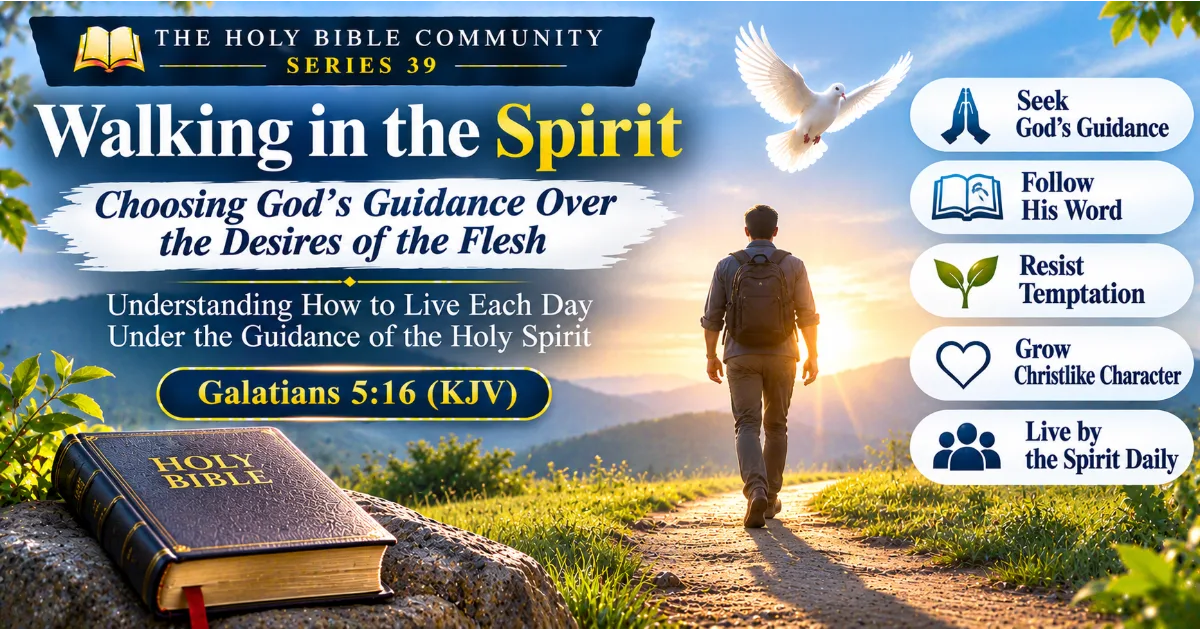
Understanding How to Live Each Day Under the Guidance of the Holy Spirit
Main Scripture: Galatians 5:16 (KJV)
“This I say then, Walk in the Spirit, and ye shall not fulfil the lust of the flesh.”
The Daily Choice Between Two Ways of Living
Every day presents us with choices. Some are simple, while others reveal the deeper condition of our hearts. We decide how to respond when someone disappoints us, whether to speak truthfully when dishonesty seems easier, whether to control our anger during an argument, and whether to follow what we know is right when personal desires pull us in another direction.
Continue Reading
These decisions may appear ordinary, but they have an important influence on our spiritual lives. They reveal which influences are shaping our thoughts, attitudes, and behaviour.
As Christians, we are called to live according to God's will. However, following Christ does not mean that we will never experience temptation, impatience, jealousy, pride, or selfish desires. Believers continue to face choices between what pleases God and what satisfies temporary personal desires. The important question is how we respond when these struggles arise.
In Galatians 5:16, the apostle Paul gives a clear instruction: “Walk in the Spirit, and ye shall not fulfil the lust of the flesh.” This verse explains an essential principle of Christian living. Instead of allowing sinful desires to control our decisions, believers should live under the guidance of the Holy Spirit.
Walking in the Spirit is not simply an experience associated with worship services or moments of intense prayer. It is a daily way of living. It influences our conversations, relationships, responsibilities, decisions, and responses to difficult situations.
The instruction also reminds us that spiritual growth requires more than human determination. We need God's help to recognise temptation, resist destructive desires, develop Christlike character, and remain faithful when circumstances become challenging.
This article explores the meaning of walking in the Spirit, the difference between the desires of the flesh and the leading of the Spirit, and the practical ways believers can follow God's guidance in everyday life.
Understanding the Context of Galatians 5:16
To understand Paul's instruction, it is important to consider the message of his letter to the Galatians. Paul was addressing believers who were facing confusion about the relationship between faith, the law, freedom, and Christian living.
He explained that salvation comes through faith in Jesus Christ and not through human efforts to earn acceptance before God. However, Christian freedom does not mean that people are free to live selfishly or disregard God's commandments.
Galatians 5:13 expresses this balance. Paul tells believers that they have been called unto liberty, but they should not use their freedom as an occasion to the flesh. Instead, they should serve one another by love.
This is an important foundation for understanding the chapter. Christian freedom is not permission to pursue every personal desire. It is freedom from the power of sin so that believers can live in a way that honours God.
Paul then contrasts the works of the flesh with the fruit of the Spirit. He describes behaviours that arise from sinful desires and compares them with the qualities produced through the work of the Holy Spirit.
The central message is that believers should not allow their old sinful patterns to determine their lives. They should walk in the Spirit and develop behaviour that reflects the character of Christ.
Walking in the Spirit is therefore closely connected with Christian freedom, love, self-control, and spiritual maturity.
What Does It Mean to Walk in the Spirit?
The expression “walk in the Spirit” describes a continuing way of life. It is not limited to one particular moment or religious experience. It means living with an ongoing dependence upon the Holy Spirit and allowing God's guidance to influence our decisions.
The word walk suggests movement and consistency. A person who walks follows a direction through repeated steps. In the same way, a believer who walks in the Spirit continues choosing a life guided by God's truth.
This involves recognising that our own understanding and desires are not always reliable. We may want something that is harmful, react in a way that is unwise, or pursue an opportunity for selfish reasons. Walking in the Spirit requires us to bring these desires under the authority of God's Word.
For example, when someone insults us, our immediate reaction may be anger. We may want to respond with harsh words or seek revenge. However, Scripture teaches patience, forgiveness, and self-control. Walking in the Spirit means seeking God's help to respond according to these principles rather than simply following the first emotion that appears.
Similarly, when we are offered an opportunity that promises personal benefit but requires dishonesty, walking in the Spirit means choosing integrity even when doing so appears costly.
It also involves dependence upon God in ordinary responsibilities. A believer can seek the Spirit's guidance while raising children, working, studying, caring for family members, managing money, and handling relationships.
The Spirit's guidance should influence the whole of life, not merely the activities we traditionally associate with religion.
Understanding the Desires of the Flesh
In Galatians 5, Paul uses the expression “the flesh” to describe sinful human desires and tendencies that oppose God's will. He is not suggesting that the human body is inherently evil. Rather, he is addressing the sinful impulses that influence people when they live according to selfish desires instead of God's guidance.
These tendencies can appear in many forms. They include uncontrolled anger, jealousy, greed, sexual immorality, pride, selfish ambition, hatred, and other behaviours that damage our relationship with God and with other people.
The desires of the flesh often promise immediate satisfaction. Anger may feel powerful in the moment. Greed may promise security through acquiring more possessions. Pride may offer a temporary sense of superiority. Revenge may appear to restore a person's dignity after being hurt.
However, these responses frequently produce deeper problems. Anger can destroy relationships, greed can create endless dissatisfaction, pride can prevent learning, and revenge can prolong conflict.
The difficulty is that sinful desires do not always appear obviously harmful at first. They may be presented as reasonable reactions to disappointment or opportunities to protect personal interests.
A person may justify dishonesty by saying that everyone behaves that way. Another may defend cruelty by claiming that the other person deserves it. Someone else may allow jealousy to grow because they believe another person's success has reduced their own opportunities.
Recognising these patterns is an important part of spiritual growth. We must learn to examine not only what we do but also the motives behind our actions.
The Difference Between Temptation and Choosing Sin
One important aspect of Christian living is understanding the difference between experiencing temptation and choosing to follow it.
Being tempted does not automatically mean that a person has committed the sin being presented. Temptation is an invitation towards something that may conflict with God's will. The important issue is how we respond.
Jesus Himself experienced temptation during His time in the wilderness, as described in Matthew 4:1-11. Yet He did not surrender to the temptations presented to Him. He responded with the truth of Scripture and remained faithful to His Father.
This account teaches believers that temptation is a reality of human experience, but it does not have to control their decisions.
A person may feel anger without choosing to speak cruelly. Someone may experience jealousy without allowing it to become resentment. A believer may experience an opportunity to act dishonestly but choose to remain truthful.
The presence of a temptation should therefore become an opportunity to seek God's help rather than a reason to surrender.
It is also important not to become careless about repeated exposure to temptation. If we continually place ourselves in situations that encourage destructive behaviour, resisting becomes more difficult. Wisdom may require us to change certain habits, avoid harmful environments, or establish boundaries.
Walking in the Spirit involves both depending upon God and taking practical steps to avoid situations that encourage sin.
The Holy Spirit Helps Us Develop Christlike Character
The Holy Spirit does more than help believers resist temptation. He also works in their lives to produce spiritual growth and Christlike character.
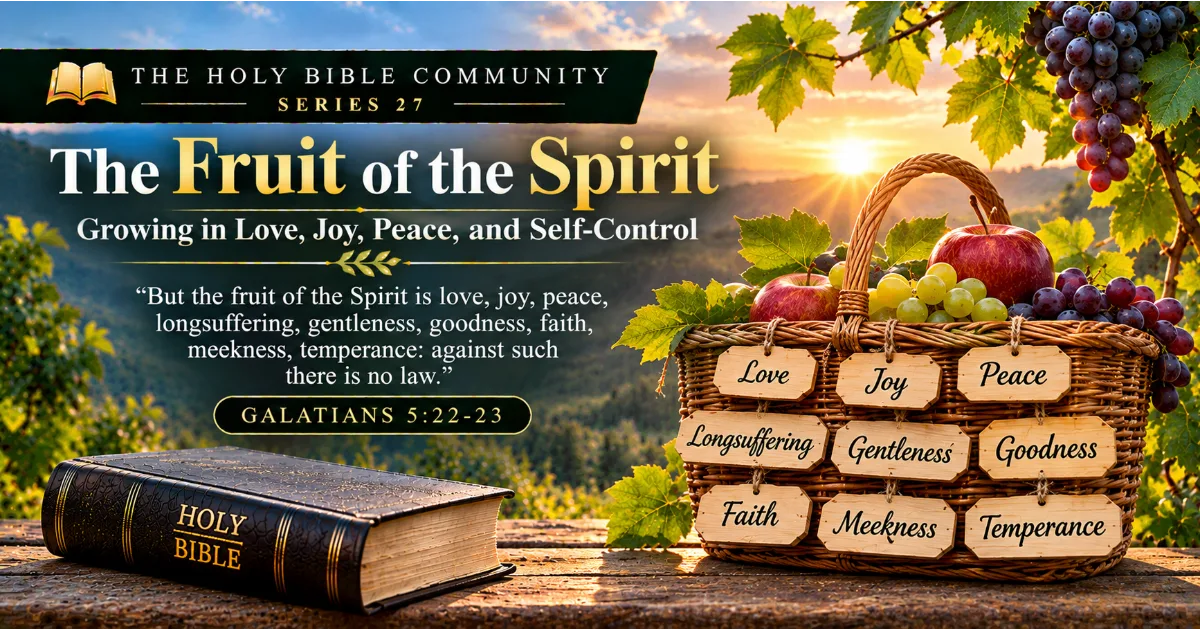
Galatians 5:22-23 describes the fruit of the Spirit through qualities such as love, joy, peace, longsuffering, gentleness, goodness, faith, meekness, and temperance.
These qualities provide a picture of what a Spirit-led life should increasingly reflect.
Love changes how we treat people. Joy helps us remain grateful even when circumstances are not perfect. Peace encourages us to seek stability in our relationship with God. Patience helps us respond thoughtfully when situations become frustrating.
Gentleness influences the way we speak, goodness shapes our actions, faith encourages trust in God, meekness helps us remain humble, and temperance teaches self-control.
These qualities are not simply personality traits. They are connected with the work of the Holy Spirit in the believer's life.
A person may naturally be calm but still struggle with selfishness. Another may be naturally generous but struggle with pride. Spiritual growth involves allowing God's influence to shape the whole character rather than relying only upon natural strengths.
The fruit of the Spirit should gradually become visible through everyday conduct. It should influence how we behave when nobody is watching, how we respond to criticism, and how we treat people who cannot offer us anything in return.
Walking in the Spirit Requires Surrender
One of the challenges of Christian living is the desire to remain in control. We often want God to guide us while still allowing us to retain complete authority over our personal choices.
We may ask for wisdom but reject it when it conflicts with our preferences. We may pray for patience but continue responding with anger. We may ask for direction while refusing to leave behind habits that are clearly harmful.
Walking in the Spirit requires a willingness to surrender our desires to God's authority.
Surrender does not mean abandoning responsibility or refusing to make decisions. It means recognising that our desires should not become more important than God's will.
Consider someone who is pursuing professional success. Ambition can be useful when it encourages diligence, skill development, and responsible planning. However, if ambition begins encouraging dishonesty, neglect of family responsibilities, or exploitation of others, it has become destructive.
Walking in the Spirit means allowing God to influence how success is pursued, not merely asking Him to bless whatever we have already decided to do.
The same principle applies to relationships, finances, personal ambitions, and everyday decisions. We should be willing to change direction when Scripture reveals that our choices are inconsistent with God's teachings.
The Holy Spirit Guides Us Through God's Word
The Bible is essential to understanding the Spirit's guidance. Believers should not separate their understanding of spiritual direction from the teachings of Scripture.
The Holy Spirit inspired Scripture and works in believers to help them understand and apply God's truth. Therefore, spiritual guidance should never become an excuse to ignore biblical principles.
Sometimes people claim that they are following a spiritual impression while pursuing behaviour that clearly conflicts with God's Word. Such claims should be examined carefully.
For example, a person cannot reasonably justify dishonesty, hatred, exploitation, or sexual immorality by saying that a personal feeling has given them permission to act that way. God's guidance does not contradict His revealed truth.
John 16:13 describes the Spirit of truth guiding believers into truth. This reminds us of the importance of truth in the Christian life.
When we study Scripture, pray, and examine our decisions, we become better equipped to recognise whether our attitudes are consistent with God's teachings.
The Bible provides a foundation for discernment. It helps us distinguish between genuine spiritual growth and desires that are simply being presented in religious language.
Walking in the Spirit During Moments of Anger
Anger is a common human emotion. It may arise when we experience injustice, disrespect, disappointment, or frustration. The Bible does not suggest that every experience of anger is automatically sinful. However, it warns believers against allowing anger to control their behaviour.
Ephesians 4:26 says, “Be ye angry, and sin not: let not the sun go down upon your wrath.”
This verse recognises that anger can occur while warning against the destructive ways it may develop.
Walking in the Spirit during moments of anger requires self-control. Instead of immediately reacting, we can pause, consider what has happened, and choose a response that reflects truth and wisdom.
For example, if a colleague speaks disrespectfully, we may feel the desire to respond with an insult. However, a Spirit-led response would seek to address the issue without unnecessary hostility.
If a family disagreement becomes heated, we may need to take time to calm down before continuing the conversation. This is not avoidance. It can be a practical way of preventing anger from controlling our words.
The goal is not to pretend that injustice does not matter. It is to respond to wrongdoing without becoming controlled by the same destructive behaviour.
Walking in the Spirit When Facing Jealousy and Comparison
Jealousy can quietly damage spiritual life. It often develops when we compare our circumstances with another person's achievements, possessions, relationships, or opportunities.
A person may feel unhappy because a friend has received a promotion. Someone may become resentful when a relative achieves something they have been hoping for. Another person may believe that their life is less valuable because someone else appears more successful.
Comparison can turn another person's blessing into a source of personal dissatisfaction.
The Bible teaches believers to practise contentment, gratitude, and love. A Spirit-led response allows us to celebrate the good things that happen to others without interpreting their success as our failure.
Walking in the Spirit also encourages us to recognise that each person has different responsibilities, opportunities, and seasons of life. Our journey should not be measured entirely by the achievements of someone else.
When jealousy appears, we can bring it honestly before God. We can ask Him to help us recognise our blessings, correct our attitudes, and focus on fulfilling our own responsibilities faithfully.
This does not mean abandoning ambition or refusing to improve our circumstances. It means pursuing growth without allowing envy to control our hearts.
Walking in the Spirit in Family Relationships
Family life provides many opportunities to practise spiritual principles. It also presents situations in which patience and self-control may be tested repeatedly.
Parents may become frustrated when children make mistakes or refuse to follow instructions. Spouses may disagree about responsibilities, finances, or family decisions. Siblings may experience competition or misunderstandings.
Walking in the Spirit means approaching these relationships with love, patience, honesty, and humility.
Parents should guide children with responsibility while avoiding uncontrolled anger or humiliation. Spouses should communicate honestly and make an effort to understand one another. Children should learn to respect their parents and contribute responsibly to family life.
The Spirit's guidance should also influence how family members handle mistakes. Instead of allowing pride to prevent apologies, believers should be willing to acknowledge wrongdoing and seek reconciliation where appropriate.
Healthy family relationships do not require the absence of disagreement. They require a commitment to handle differences with wisdom and respect.
Love should not become an excuse to ignore harmful behaviour, and forgiveness should not require someone to remain exposed to danger. Walking in the Spirit includes the wisdom to establish appropriate boundaries and seek help when necessary.
Walking in the Spirit at Work and in Public Life
The workplace is another important setting for Christian faith. Professional responsibilities often involve pressure, deadlines, competition, financial expectations, and interactions with people who have different priorities.
These situations can test integrity and self-control.
A person may be tempted to exaggerate achievements, take credit for another person's work, spread rumours, or treat colleagues unfairly to gain an advantage. A business owner may face pressure to mislead customers or compromise quality to increase profits.
Walking in the Spirit means choosing honesty and fairness even when dishonest behaviour appears more profitable.
It also means treating people respectfully regardless of their position. Leaders should avoid using authority to intimidate others, and employees should fulfil their responsibilities with sincerity.
Galatians 5:13 encourages believers to serve one another by love. This principle can influence professional relationships through cooperation, consideration, and a willingness to support others.
Christian faith should be visible not only in religious conversations but also in the quality of our work and the integrity of our decisions.
The Importance of Prayer and Dependence on God
Walking in the Spirit cannot be reduced to a list of self-improvement techniques. It requires an ongoing relationship with God.
Prayer is an important expression of that relationship. Through prayer, believers acknowledge their weaknesses, seek wisdom, confess wrongdoing, and ask for strength to live according to God's will.
There are moments when we recognise the correct response but struggle to follow it. We may know that forgiveness is right but feel overwhelmed by resentment. We may understand the importance of patience but find ourselves becoming impatient under pressure.
These are moments when we should seek God's help sincerely.
Prayer allows us to bring our struggles before Him without pretending that we are stronger than we really are. We can ask for the wisdom to recognise temptation and the strength to choose what is right.
Prayer should also lead us towards practical obedience. If we need to apologise, we should be willing to take that step. If a habit is damaging our spiritual life, we should make a sincere effort to change it. If we need guidance, we should be willing to seek wise and trustworthy counsel.
Dependence upon God does not remove our responsibility. It gives us a foundation for fulfilling that responsibility faithfully.
What Happens When We Fail?
Every believer will face moments of weakness. We may react with anger, become jealous, speak carelessly, or make decisions that do not reflect our faith.
When this happens, it is important to respond with honesty rather than denial.
Some people attempt to justify their behaviour by blaming others. They may say that they became angry because someone provoked them or acted dishonestly because circumstances were difficult. Although external circumstances can influence behaviour, believers must still take responsibility for their choices.
Others may become discouraged and believe that one failure means they have lost all spiritual progress.
Neither response is helpful.
The Bible teaches the importance of confession, repentance, and returning to God. First John 1:9 explains that if we confess our sins, God is faithful and just to forgive us and cleanse us from all unrighteousness.
This promise reminds believers that failure should lead them towards repentance rather than permanent discouragement.
When we recognise a mistake, we should acknowledge it honestly, seek God's forgiveness, make amends where appropriate, and learn from the experience.
If our words have hurt someone, we should be willing to apologise. If we have acted dishonestly, we should take responsibility and correct the situation where possible. If we have developed a harmful habit, we should seek appropriate support and take practical steps towards change.
Spiritual growth includes learning how to respond faithfully after failure.
Practical Ways to Walk in the Spirit Every Day
Walking in the Spirit becomes meaningful when it influences ordinary decisions. The following habits can help believers develop a more consistent spiritual life.
Begin the day with prayer. Acknowledge your dependence upon God and ask for wisdom to respond faithfully to the situations you may encounter.
Read Scripture regularly. Study God's Word to understand His principles and develop discernment. Apply what you learn instead of treating Bible reading as an activity that is separate from daily life.
Examine your motives. Before making an important decision, consider whether you are being influenced by love, truth, and responsibility or by pride, greed, fear, and selfish ambition.
Pause before reacting. When anger or frustration appears, take time to consider your response. Do not allow temporary emotions to determine words or actions that may cause lasting harm.
Practise self-control. Recognise habits and situations that encourage destructive behaviour. Establish boundaries that help you remain faithful.
Choose forgiveness over revenge. Address wrongdoing with wisdom, maintain appropriate boundaries, and avoid allowing bitterness to control your heart.
Develop gratitude. Appreciate what God has given you instead of constantly comparing your circumstances with those of others.
Serve other people. Look for opportunities to demonstrate love through practical assistance, encouragement, fairness, and generosity.
Seek wise fellowship. Spend time with believers who encourage spiritual maturity, honest living, and faithfulness to Scripture.
Reflect at the end of the day. Consider where you responded well and where you need correction. Pray for strength to make wiser decisions in the future.
These practices do not earn God's favour. They help believers live in a way that reflects their faith and dependence upon the Holy Spirit.
Conclusion: Let the Spirit Guide Your Daily Walk
Walking in the Spirit is a central part of Christian living. It means allowing God's guidance to influence our thoughts, choices, relationships, and actions instead of surrendering control to sinful desires.
Galatians 5:16 reminds us that believers should walk in the Spirit rather than fulfil the desires of the flesh. This instruction is relevant in every part of life.
When anger challenges our patience, the Spirit's guidance calls us towards self-control. When jealousy influences our thinking, we are encouraged to practise gratitude and love. When pride prevents us from accepting correction, we are reminded to become humble. When temptation offers an easier but dishonest path, we are called to remain faithful to God's truth.
This journey requires daily dependence upon God. It is not simply about trying harder through human strength. It involves prayer, Scripture, obedience, repentance, and a willingness to allow the Holy Spirit to shape our character.
We will not always respond perfectly. There may be moments when we fail, become discouraged, or struggle with old habits. However, we should not allow these experiences to become reasons to abandon our spiritual journey. We can return to God, seek forgiveness, and continue growing.
Let us remember that the goal of walking in the Spirit is not to create an outward appearance of religious behaviour. It is to develop a life that increasingly reflects Jesus Christ.
May our words become more gracious, our decisions more faithful, our relationships more loving, and our character more Christlike. May we learn to recognise the difference between temporary desires and the direction God has given us through His Word.
Every day offers another opportunity to choose faithfulness. Let us take those steps with humility, prayer, and trust in God.
A Prayer for Guidance by the Holy Spirit
Heavenly Father,
Thank You for the gift of the Holy Spirit and for guiding us through Your Word. Thank You for reminding us that we are called to live according to Your will rather than allowing sinful desires to control our decisions.
Lord, examine our hearts and reveal the attitudes that need to change. Help us recognise pride, jealousy, anger, greed, selfishness, and every desire that leads us away from Your teachings.
Teach us to walk in the Spirit every day. Give us patience when we are frustrated, humility when we are corrected, courage when we face temptation, and wisdom when we must make difficult decisions.
Help us control our words and actions. Teach us to treat our families with love, our colleagues with fairness, our friends with sincerity, and every person with dignity.
When we face temptation, strengthen us to choose what is right. When we become discouraged, remind us of Your grace. When we fail, give us the humility to confess our mistakes and the willingness to change.
Help us grow in love, joy, peace, patience, gentleness, goodness, faith, meekness, and self-control. Let these qualities become increasingly visible in our daily lives.
Father, guide our decisions and help us recognise the difference between what satisfies temporary desires and what honours You. May Your truth remain the foundation of our thoughts and actions.
Thank You for Your patience, forgiveness, and guidance. Help us continue walking faithfully with You through every season of life.
In the name of Jesus Christ, we pray.
Amen.