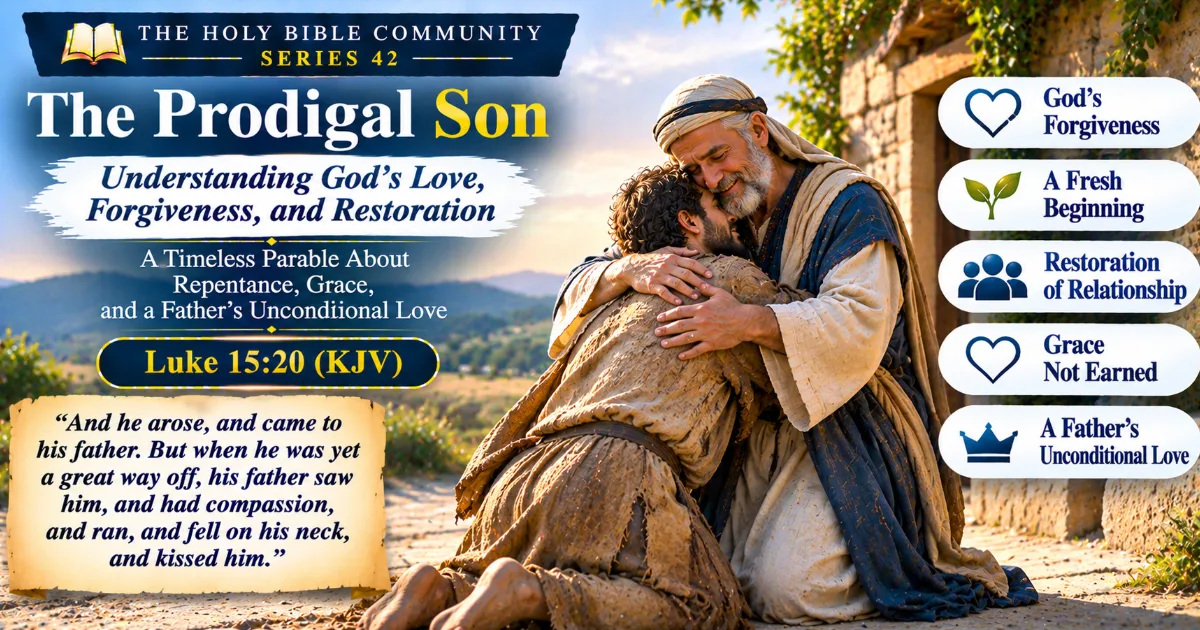
One of the most moving stories told by Jesus is the parable of the prodigal son, recorded in Luke 15:11-32. It is a story about a young man who leaves his father's home in pursuit of independence, wastes his inheritance through reckless living, experiences the consequences of his decisions, and eventually returns home in repentance. Yet the most remarkable part of the story is not simply the son's failure or his decision to return. It is the father's response. Instead of rejecting him, humiliating him, or demanding that he first prove his worth, the father welcomes him with compassion, embraces him, and celebrates his return.
This parable reveals something profound about the character of God. It teaches us about the seriousness of sin, the emptiness of a life separated from God, the importance of repentance, and the extraordinary depth of divine mercy. It also reminds us that no matter how far someone has wandered, the invitation to return to God remains open.
Many people carry the burden of past mistakes. Some regret decisions that damaged their relationships, their families, their finances, or their spiritual lives. Others feel that they have disappointed God so deeply that returning to Him is no longer possible. The story of the prodigal son speaks directly to such hearts. It reveals a Father who sees the returning sinner, responds with compassion, and offers restoration.
The parable also challenges those who remain close to religious traditions but struggle to understand grace. Through the older brother, Jesus exposes resentment, self-righteousness, and the danger of believing that obedience should make us more deserving of God's love than others.
Understanding this story can transform how we view ourselves, how we respond to our failures, and how we treat people who are trying to begin again.
Continue Reading
Understanding the Context of the Parable
The parable of the prodigal son appears in Luke 15, a chapter that contains three connected stories: the lost sheep, the lost coin, and the lost son. Jesus tells these parables in response to criticism from religious leaders who objected to His willingness to receive sinners and eat with them.
The religious leaders considered themselves righteous and were uncomfortable with the attention Jesus gave to people they regarded as morally unworthy. They struggled to understand why someone who taught God's truth would welcome those who had lived sinful lives.
Jesus responded by describing the joy that comes when something lost is found. A shepherd rejoices when he finds a lost sheep. A woman celebrates when she finds a lost coin. In the same way, there is joy in heaven over a sinner who repents.
The parable of the prodigal son develops this message through a family relationship. It shows not only the person who becomes lost but also the loving father who longs for his return and the older brother who struggles to accept the celebration.
The three characters reveal different spiritual realities. The younger son represents rebellion, separation, and repentance. The father represents compassion, forgiveness, and restoration. The older brother represents resentment and the difficulty of accepting grace when it is extended to someone we believe does not deserve it.
The story is therefore much more than a lesson about one young man's poor decisions. It is an invitation to understand the heart of God.
The Younger Son's Desire for Independence
The story begins when the younger son approaches his father and asks for his share of the inheritance. He wants to receive what would eventually belong to him without waiting for the appropriate time.
His request reveals more than a financial desire. He wants the benefits of his father's wealth without remaining under his father's authority. He wants independence without responsibility and freedom without considering the consequences.
The father grants the request and divides his property between his two sons. Soon afterward, the younger son gathers his belongings and travels to a distant country.
His departure represents the human desire to live independently of God. People sometimes want the blessings of life without acknowledging the One who provides them. They want freedom to make their own choices but may not consider how those choices affect their relationship with God and others.
God created human beings with the ability to make decisions. However, genuine freedom does not mean that every possible choice leads to life. Decisions have consequences, and living according to selfish desires can gradually lead a person away from what is good.
The younger son's journey begins with excitement, but the direction of his life is already leading him away from the security and relationship he once enjoyed.
The Illusion of Freedom
In the distant country, the younger son wastes his inheritance through reckless living. He spends what he has received without exercising wisdom or restraint.
At first, his new circumstances may have seemed attractive. He was away from his father's household and could make decisions without being questioned. He could spend money as he pleased and pursue whatever lifestyle he desired.
Yet the resources that made his independence comfortable were limited. When the money was gone, the security it provided disappeared.
This reveals an important truth about the difference between temporary pleasure and lasting fulfilment. Something may feel satisfying in the moment while gradually damaging a person's future. A life built entirely around immediate gratification often ignores the importance of responsibility, discipline, and spiritual direction.
Sin can create a similar illusion. It may promise freedom, excitement, and satisfaction, but it often leads to consequences that were not considered at the beginning.
This does not mean that every difficult circumstance is the direct result of a person's wrongdoing. People experience suffering for many reasons, including injustice, illness, and circumstances beyond their control. However, the younger son's situation clearly demonstrates the consequences of his own irresponsible choices.
The story encourages us to examine what we are pursuing and whether our decisions are leading us towards genuine life or temporary satisfaction.
When Everything Falls Apart
After the younger son has spent everything, a severe famine comes upon the country. He begins to experience serious need.
The person who once had enough money to support his lifestyle now struggles to find food. He becomes so desperate that he accepts work feeding pigs.
For a Jewish audience, this detail would have carried particular significance because pigs were considered unclean animals under Jewish law. His situation represents an extreme form of humiliation and deprivation.
The young man who once enjoyed the resources of his father's household now finds himself in circumstances he probably never imagined when he first left home.
His experience illustrates how quickly outward security can disappear. Money, popularity, possessions, and social connections cannot guarantee protection from every difficulty. When these things become the foundation of a person's identity, losing them can create a profound sense of emptiness.
The younger son discovers that the distant country cannot provide what he needs. The freedom he pursued has not given him lasting peace, and the resources he trusted have disappeared.
Sometimes people only begin to recognise the importance of something after they have lost it. The distance between the younger son and his father helps him understand what he previously took for granted.
The Moment of Self-Realisation
Luke 15:17 records a turning point in the young man's life.
The KJV says, "And when he came to himself, he said, How many hired servants of my father's have bread enough and to spare, and I perish with hunger!"
The phrase "when he came to himself" is important. It describes a moment of recognition. The younger son begins to see his circumstances clearly. He understands the seriousness of his decisions and remembers the provision available in his father's household.
Repentance often begins with this kind of honest self-examination. A person must recognise that something is wrong before making a meaningful decision to change direction.
It is easy to blame circumstances, other people, or bad luck for every difficulty. Although external factors can genuinely contribute to suffering, personal responsibility remains important when our own decisions have caused harm.
The younger son does not pretend that his actions were harmless. He recognises that he has sinned against heaven and against his father.
His awareness does not immediately remove his difficulties, but it changes the direction of his life. Instead of continuing to defend his choices, he begins to consider returning home.
This is one of the most important lessons in the parable: acknowledging failure can become the beginning of restoration.
True Repentance Requires a Change of Direction
The younger son decides to return to his father. He prepares what he will say:
"Father, I have sinned against heaven, and before thee, And am no more worthy to be called thy son: make me as one of thy hired servants." (Luke 15:18-19, KJV)
His words demonstrate an awareness of responsibility. He does not demand his former position or insist that his father must accept him on his own terms. He acknowledges that he has done wrong.
Biblical repentance involves more than feeling uncomfortable about the consequences of sin. It includes recognising wrongdoing, turning away from it, and seeking to live differently.
A person may regret being caught, losing money, damaging a reputation, or experiencing punishment without truly regretting the wrong itself. Genuine repentance goes deeper. It involves a change in the heart and a willingness to take responsibility.
The younger son does not remain in the distant country merely thinking about how unfortunate his circumstances have become. He gets up and begins the journey home.
This distinction is important. Good intentions are meaningful, but they must eventually influence our actions. If someone recognises that a particular path is destructive, continuing along that path while repeatedly promising to change does not produce restoration.
Repentance requires movement in a new direction.
The Father's Extraordinary Compassion
The most powerful moment in the story appears in Luke 15:20.
"And he arose, and came to his father. But when he was yet a great way off, his father saw him, and had compassion, and ran, and fell on his neck, and kissed him."
The father sees his son while he is still far away. He does not wait for the young man to reach the house before responding. He runs towards him, embraces him, and welcomes him.
This is a beautiful picture of divine compassion.
The father does not deny what happened. The younger son has genuinely wasted his inheritance and damaged the relationship through his actions. Yet the father's response demonstrates that the son's failure is not greater than the possibility of restoration.
The father's compassion is not presented as indifference towards wrongdoing. The son has already recognised his sin and returned in repentance. The father responds to his return with love rather than treating his past as the only thing that defines him.
This teaches us that God is not pleased when people remain separated from Him. He calls people to return, and His mercy is greater than the shame that may keep them away.
Many people imagine that God is waiting for them to become perfect before they can approach Him. The parable presents a different picture. The son returns while still carrying the consequences and appearance of his difficult journey. His father welcomes him.
We should not interpret this as permission to continue living irresponsibly. Rather, it is an invitation to stop running away and begin returning to God.
God's Love Is Greater Than Our Past
The younger son expects that he has lost the right to be treated as a son. He prepares to ask for a place among the hired servants.
However, the father does not respond by reducing him to the lowest possible position in the household. He embraces him and begins arranging his restoration.
The father's love is not based on the son's financial usefulness, social reputation, or ability to repay the inheritance. He welcomes him because he is his son and has returned.
This illustrates an essential truth about God's grace. Human beings cannot earn divine love through a perfect record of behaviour. Salvation is God's gift, received through faith, not a reward purchased through personal achievement.
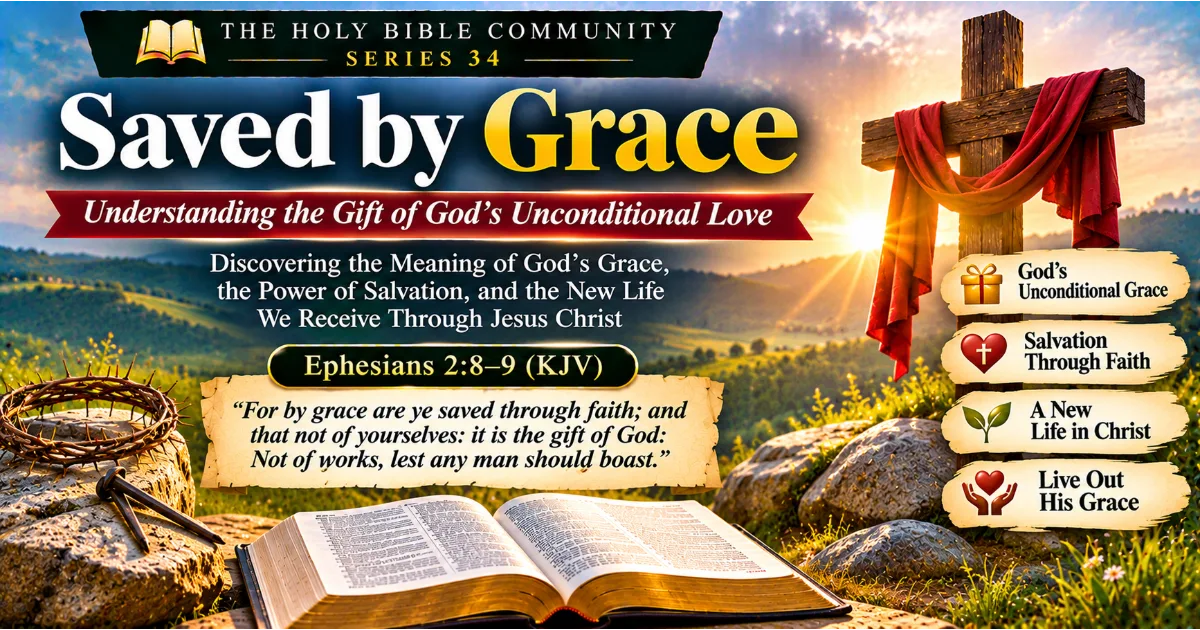
Ephesians 2:8-9 (KJV) explains:
"For by grace are ye saved through faith; and that not of yourselves: it is the gift of God: Not of works, lest any man should boast."
Grace does not make sin unimportant. Instead, it reveals that God's mercy is not limited by our ability to make ourselves worthy.
When people understand grace, they can acknowledge their failures without believing that failure must become their permanent identity. They can seek forgiveness, accept responsibility, and begin living differently.
The past may contain mistakes that cannot be reversed, but it does not have to determine every decision in the future.
The Robe, the Ring, and the Shoes
The father instructs his servants to bring the best robe, place a ring on his son's hand, and put shoes on his feet.
These actions carry symbolic significance within the story. They communicate welcome, honour, and restored belonging.
The robe represents a public expression of acceptance. The ring can be understood as a sign of family status and dignity. The shoes distinguish the returning son from a person who is merely serving as a slave.
The father does not simply allow his son to remain somewhere on the property. He publicly welcomes him back into the household.
This detail reminds us that God's restoration is not merely about escaping punishment. It is also about recovering a relationship with Him.
When a person turns to God in repentance and faith, the Christian message is not that they must spend the rest of their life defined by their former identity. In Christ, forgiveness and new life are available.
Second Corinthians 5:17 (KJV) declares:
"Therefore if any man be in Christ, he is a new creature: old things are passed away; behold, all things are become new."
A new life does not mean that every consequence of previous decisions disappears immediately. Some relationships require time to heal, debts may still need to be addressed, and trust may need to be rebuilt. Nevertheless, a person's relationship with God can begin a new chapter.
The Celebration of Restoration
The father orders a celebration because his son has returned.
In Luke 15:24 (KJV), he explains:
"For this my son was dead, and is alive again; he was lost, and is found. And they began to be merry."
The celebration reveals the father's joy. The son who had been separated from the family has returned.
Jesus uses this moment to communicate the joy associated with repentance. The previous parables in Luke 15 also describe celebration when something lost is found.
This is a reminder that God does not regard repentance as an inconvenience. A person turning away from sin and returning to Him is a cause for joy.
It also challenges how we respond when someone begins changing their life. People sometimes remember another person's past so strongly that they refuse to recognise genuine progress.
A person who has made serious mistakes may face suspicion, criticism, and rejection even after making sincere efforts to change. While trust may need to be rebuilt gradually, a willingness to recognise repentance can create opportunities for healing.
The father's celebration teaches us not to treat restoration as something shameful. A person returning to what is right deserves encouragement rather than unnecessary humiliation.
The Older Brother: A Different Kind of Lostness
The story does not end with the younger son's return. Jesus introduces the older brother, who is working in the field when he hears music and celebration.
When he learns that his younger brother has returned and that their father has prepared a feast, he becomes angry and refuses to enter the house.
The older brother reminds his father that he has served him for many years and has not disobeyed his commands. Yet he feels that he has not received the same celebration.
His response reveals resentment. He sees the younger brother's restoration as an unfair reward rather than an opportunity to rejoice over a family member's return.
The older brother represents a spiritual danger that can exist even among people who appear outwardly responsible. A person may follow religious practices, fulfil obligations, and maintain a respectable reputation while developing a judgmental attitude towards others.
His anger suggests that he views his relationship with his father primarily through the language of service and reward.
He seems to believe that his obedience should guarantee a greater sense of recognition than the younger brother receives.
This is a warning against turning faith into a competition in which we compare ourselves with others and decide who deserves compassion.
The Danger of Self-Righteousness
The older brother's attitude resembles the criticism that prompted Jesus to tell the parable.
The religious leaders who questioned Jesus' association with sinners believed that their own religious conduct distinguished them from people they considered unworthy. They struggled to understand why those people should be welcomed.
The older brother demonstrates a similar attitude. He focuses on his brother's failures while emphasising his own obedience.
There is nothing wrong with living responsibly or remaining faithful to one's commitments. The problem arises when obedience becomes a reason for pride, contempt, or resentment.
A person can become so focused on proving their own righteousness that they forget the mercy through which they themselves depend on God.
Romans 3:23 (KJV) says:
"For all have sinned, and come short of the glory of God;"
This verse reminds us that no human being stands before God with a perfect record. We all need mercy.
Understanding this should make us humble. Instead of using our strengths to look down on others, we should use them to serve, encourage, and support people who are struggling.
The older brother challenges us to examine whether we genuinely rejoice when another person receives forgiveness, another opportunity, or a fresh beginning.
The Father's Response to the Older Brother
The father does not ignore the older brother's anger. He goes out and speaks with him.
Luke 15:31 (KJV) records his words:
"And he said unto him, Son, thou art ever with me, and all that I have is thine."
The father reassures him that his place in the family has not been taken away. The younger son's restoration does not mean that the older brother has lost his relationship with his father.
The father then explains why celebration is appropriate:
"It was meet that we should make merry, and be glad: for this thy brother was dead, and is alive again; and was lost, and is found." (Luke 15:32, KJV)
The father's words reveal that restoration is not a competition. Welcoming one child home does not require rejecting another.
This is an important lesson for families, workplaces, churches, and communities. Someone else's progress does not reduce our own worth. Someone receiving forgiveness does not mean that our faithfulness has become meaningless.
We should be careful not to allow comparison to turn our hearts bitter.
Returning to God After Failure
The younger son's journey offers encouragement to anyone who feels distant from God.
Perhaps someone has neglected prayer, stopped reading Scripture, allowed destructive habits to take control, or made decisions that have harmed important relationships. They may feel embarrassed about returning to a life of faith.
The parable reminds us that the right response to spiritual failure is not to remain distant. It is to turn towards God.
Returning to God begins with honesty. We must be willing to acknowledge what has gone wrong rather than hiding behind excuses.
It also requires humility. We cannot demand that God approve of every choice simply because we want to avoid feeling guilty. We need to recognise our need for forgiveness and transformation.
Finally, returning requires action. Prayer, confession, renewed commitment, and practical changes can help us begin walking in a healthier direction.
Some struggles require support from mature believers, pastors, counsellors, or other appropriate professionals. Seeking help is not a sign of spiritual weakness. It can be an important part of taking responsibility and rebuilding one's life.
The most important thing is not to allow shame to become a permanent barrier between ourselves and God.
Forgiveness Does Not Mean Ignoring Consequences
The parable celebrates the son's return, but it does not suggest that every consequence of his decisions disappears.
The inheritance has been wasted. The money cannot simply be recovered through a celebration. The younger son must live with the reality of what he has done.
This distinction is important when applying the story to real relationships.
Forgiveness does not always mean that trust should be restored immediately. A person who has caused harm may need to demonstrate consistent change over time. Those who have been hurt may need appropriate boundaries to protect their well-being.
Reconciliation can require honest conversations, accountability, restitution where possible, and patience from everyone involved.
The father's compassion does not teach us to pretend that wrongdoing never happened. It teaches us that wrongdoing does not have to prevent repentance and restoration.
Similarly, Christians should not use forgiveness as a reason to tolerate abuse, ongoing manipulation, or dangerous behaviour. Protecting someone from harm and offering forgiveness are not necessarily contradictory.
True restoration should be accompanied by honesty, responsibility, and a genuine desire to live differently.
The Father's House as a Picture of Belonging
The younger son originally leaves home because he believes that life elsewhere will offer something better. Yet after losing everything, he remembers the security of his father's household.
His return illustrates the importance of belonging.
Human beings need meaningful relationships. We need love, guidance, encouragement, and a place where we can be known rather than judged only by our failures.
In the Christian understanding of faith, a relationship with God provides the deepest foundation for belonging. God is not merely someone to approach when life becomes difficult. He is the Creator who calls people into a relationship with Himself.
The father's house also reminds us of the importance of healthy family relationships. Parents and children may experience disagreement, disappointment, and periods of distance. However, patience, humility, communication, and forgiveness can sometimes open the way to reconciliation.
Not every family relationship is safe or capable of immediate restoration. In situations involving serious harm, appropriate boundaries remain necessary. Nevertheless, the story encourages us to value love and to remain open to genuine change.
How to Apply the Parable in Everyday Life
The parable of the prodigal son is not simply a story to admire. It contains practical lessons that can influence the way we live.
Recognise when you are moving in the wrong direction. The younger son eventually acknowledged that his decisions had taken him away from the life he needed. We should regularly examine our priorities, habits, and attitudes. If a particular choice is damaging our spiritual life, relationships, or responsibilities, we should be willing to change direction.
Take responsibility for your decisions. The younger son did not return home blaming everyone else. He acknowledged his wrongdoing. We should avoid making excuses when our actions have hurt others. Taking responsibility is an essential part of personal growth.
Do not allow shame to keep you away from God. Regret can become destructive when it convinces us that change is impossible. Instead of hiding from God, we should approach Him with honesty and seek His forgiveness.
Be willing to begin again. Returning home required the younger son to leave the distant country and take the first step towards his father. In the same way, a new beginning often requires practical decisions, not merely emotional promises.
Show compassion to people who are changing. The father did not humiliate his returning son. We should be careful not to make another person's past the only thing we see when they are genuinely trying to improve.
Avoid comparing your life with someone else's. The older brother became resentful because he compared his experience with his younger brother's celebration. We should learn to appreciate our own responsibilities without allowing comparison to destroy our relationships.
Celebrate genuine transformation. When someone turns away from destructive behaviour, makes peace, or begins rebuilding their life, encouragement can help them continue. We should recognise sincere progress while remaining wise about accountability.
The Parable and the Christian Understanding of Salvation
The story of the prodigal son offers a powerful picture of grace, but its message should be understood within the wider teaching of Scripture.
The Bible teaches that sin separates humanity from God and that reconciliation comes through Jesus Christ. Human beings cannot save themselves through good works or personal achievements.
Romans 5:8 (KJV) says:
"But God commendeth his love toward us, in that, while we were yet sinners, Christ died for us."
The father's welcome in the parable helps us understand God's compassion towards those who return to Him. The wider gospel explains the foundation of this reconciliation through the life, death, and resurrection of Jesus Christ.
The invitation to return is not an invitation to treat sin lightly. It is an invitation to receive grace and live in a transformed relationship with God.
Faith involves trusting Christ, acknowledging our need for forgiveness, and allowing His teaching to shape our lives.
The parable reminds us that our failures need not have the final word. Through God's grace, repentance can lead to restoration and a new beginning.
A Heart That Reflects the Father's Love
The parable also challenges us to become more compassionate towards others.
It is easy to welcome people when they have never disappointed us. It is more difficult when someone has made serious mistakes, damaged our trust, or chosen a path we strongly disagree with.
The father demonstrates a willingness to receive his returning son with compassion. The older brother demonstrates the opposite response, allowing resentment to prevent him from sharing in the family's joy.
We should ask ourselves which response more closely reflects the character of Christ.
Do we make room for people who are genuinely trying to change? Do we encourage those who are returning to faith? Do we allow past mistakes to define someone permanently? Do we celebrate another person's progress, or do we secretly wish they would remain ashamed?
These questions are not always easy. Compassion does not require us to ignore wisdom or abandon healthy boundaries. It does require us to resist cruelty, unnecessary humiliation, and the desire to see others remain trapped in their failures.
A heart shaped by God's grace should be willing to encourage repentance and welcome genuine transformation.
Conclusion: The Way Home Is Still Open
The parable of the prodigal son is a story of departure, loss, repentance, compassion, and restoration. The younger son leaves home believing that independence will bring satisfaction. He wastes his inheritance, experiences hardship, and eventually recognises the seriousness of his choices. He returns expecting to be treated as a servant, but his father welcomes him with love.
The father's response reveals the extraordinary mercy of God. He does not celebrate the son's reckless behaviour. He celebrates the son's return. The son who was lost has been found, and the family has an opportunity to be together again.
The older brother reminds us that remaining close to religious activities does not automatically mean that our hearts reflect God's compassion. Resentment, pride, and comparison can prevent us from celebrating the restoration of others.
This story invites every reader to examine their relationship with God. If you have wandered away, do not allow regret to convince you that returning is impossible. Acknowledge your mistakes, turn towards God, and seek His forgiveness.
If you have remained faithful through difficult seasons, guard your heart against pride and resentment. Remember that God's grace is not a reward reserved for people who appear more deserving than others.
And if someone around you is trying to rebuild their life, respond with wisdom, compassion, and encouragement. Do not ignore accountability, but do not make their past a permanent prison.
The central message of the prodigal son is that God welcomes the repentant and rejoices when the lost return. No matter how far someone has wandered, the invitation to come home remains a message of hope.
A Prayer for Forgiveness and Restoration
Heavenly Father, thank You for Your endless mercy, patience, and love. Thank You for reminding me through the story of the prodigal son that I can always turn towards You when I recognise my mistakes and sincerely seek Your forgiveness.
Lord, forgive me for the times I have chosen my own desires over Your wisdom. Forgive my selfishness, pride, disobedience, and the decisions that have taken me away from Your presence. Give me the courage to acknowledge my failures honestly and the strength to change my direction.
Help me not to remain trapped in guilt or shame. Teach me to accept Your grace with a humble heart and to live in a way that honours You. Restore what can be restored, guide me through the consequences of my decisions, and help me rebuild the relationships and responsibilities that I have neglected.
Father, remove resentment and self-righteousness from my heart. Teach me to rejoice when others find their way back to You. Help me show compassion without abandoning wisdom, forgive without encouraging wrongdoing, and support those who are sincerely trying to change.
May my life reflect Your patience, kindness, and truth. Keep me close to You, strengthen my faith, and guide my steps each day.
Thank You for being a loving Father who calls His children to return. In the precious name of Jesus Christ, I pray.
Amen.
#TheProdigalSon #GodsForgiveness #ChristianFaith #RepentanceAndGrace #GodsUnconditionalLove